
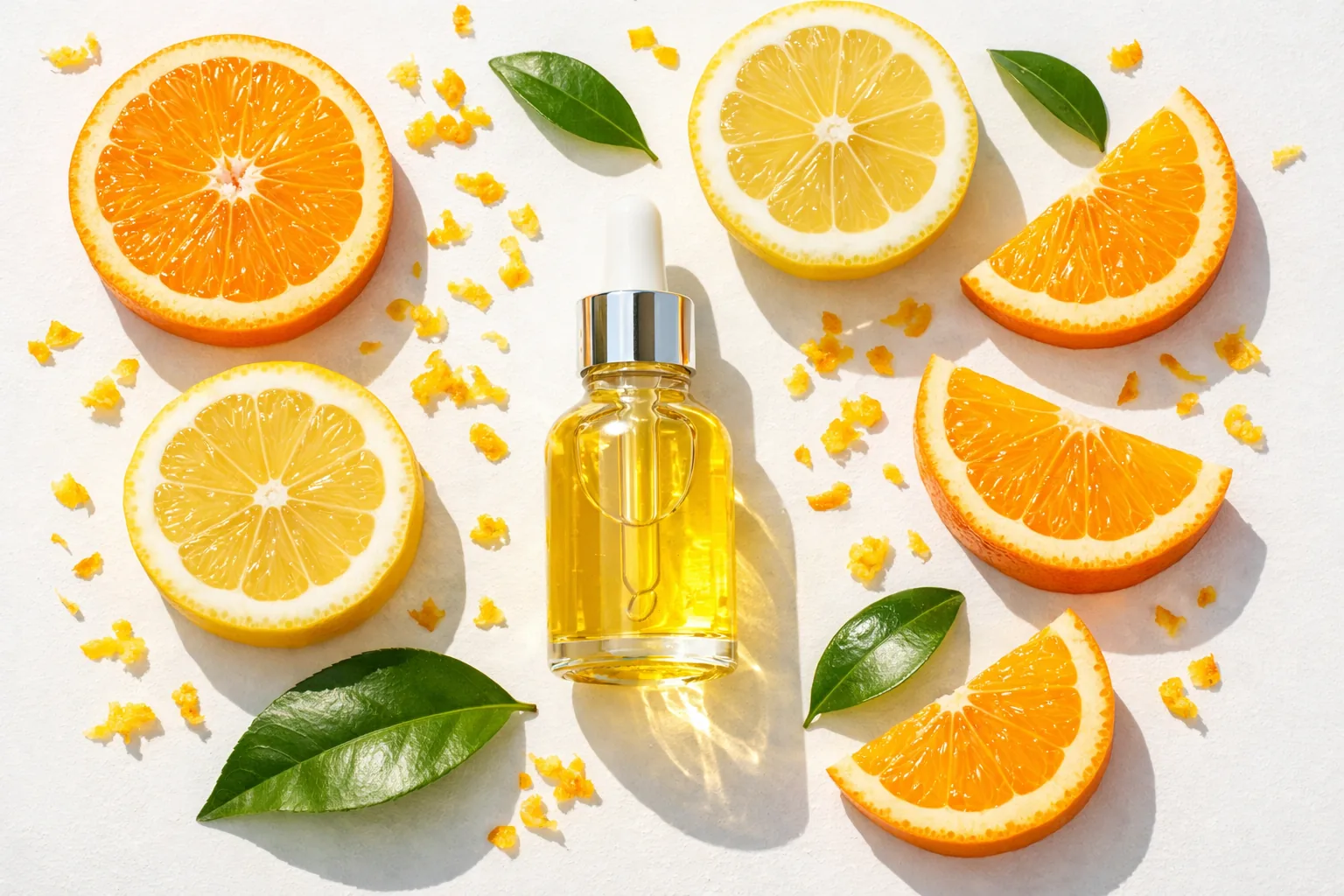
Open a vitamin C serum you bought a few months ago and look at the color. If it has turned from pale gold to a deep orange or brown, the active ingredient has already broken down, and you have been rubbing in something close to tinted water. That single observation explains most of the frustration people have with this category. The ingredient genuinely works. Decades of research back it for brightening, fading dark spots, and adding antioxidant protection on top of sunscreen. The problem is almost never the molecule. It is the formula around it and the bottle it sits in.
So the real decision is not “which serum is best” in the abstract. It is which form of vitamin C suits your skin, and whether the packaging keeps that form stable long enough to use the whole bottle. Pure L-ascorbic acid is the most studied and most potent form, but it is also the most fragile and the most likely to sting sensitive skin. Gentler derivatives trade a little raw strength for stability and comfort, which for daily users often means better results in practice because the product stays active and you keep reaching for it.
The five serums below cover that full range, from a beginner-friendly derivative to a high-strength L-ascorbic acid formula. Each one is matched to a specific kind of skin and a specific tolerance, so the goal here is to find your row rather than crown a single winner.
Find your row first
- New to vitamin C, or easily irritated. Start with a stable derivative so your skin barrier adjusts without redness. The TruSkin serum is the gentle on-ramp.
- You want the highest buyer-satisfaction formula. A multi-derivative blend covers several depths of skin at once, which is the Naturium.
- You like a clean, single-ingredient routine. No fragrance, no extras, one job done well, which is The Ordinary.
- You want a pharmacy-grade pure vitamin C from a clinical brand. That is the Vichy, in a bottle built to protect it.
- You have used vitamin C for a while and want maximum potency. The SeoulCeuticals high-strength blend is the advanced pick.
TruSkin’s Vitamin C Serum is the one most people should try first, and its standing as one of the most-bought vitamin C serums on Amazon is part of the reason. A fragile, badly formulated vitamin C would collect a steady stream of complaints about going off within weeks. This one has kept a strong rating across an enormous number of buyers over years, which is the kind of signal a single lab claim cannot fake.
The formula pairs a stable vitamin C derivative (sodium ascorbyl phosphate) with hyaluronic acid and botanical brighteners. The stable form is the point: it resists oxidation, lasts longer once opened, and is far less likely to sting than pure L-ascorbic acid. That makes it forgiving for anyone new to the ingredient or prone to redness. Buyers tend to report gradual brightening and smoother texture over a month or two of daily use rather than an overnight change, which is exactly what you should expect from a well-behaved derivative.
Skip this if you are an experienced user chasing the strongest possible result. A derivative this gentle is, by design, milder than pure L-ascorbic acid.
TruSkin Vitamin C Serum
Naturium’s Vitamin C Complex takes a layered approach instead of relying on one molecule. It combines three vitamin C derivatives, each of which penetrates at a different rate and depth, so you get surface brightening and deeper antioxidant support from a single bottle. This is the strategy dermatology has been pointing people toward as a sensible alternative to harsh single-acid formulas: you keep most of the benefit while cutting the irritation and stability problems.
It earns one of the highest ratings in this group, and the texture is a big part of why. It is light, sinks in without a sticky film, and layers cleanly under moisturizer and sunscreen. If your skin has rejected stronger serums with tingling or flaking, the multi-derivative route is the one to try next.
Skip this if your skin is very dry and you want hydration built in. There is no hyaluronic acid here, so layer a hydrating step underneath.
Naturium Vitamin C Complex
The Ordinary Ascorbyl Glucoside Solution 12% is exactly what it says: one active, one job, no filler. Ascorbyl glucoside is a water-soluble derivative that is far more stable than L-ascorbic acid, converts to active vitamin C once it is on your skin, and rarely causes the sting that higher-percentage pure forms can. For anyone who wants a straightforward product that will not irritate or turn orange in a fortnight, it is the clearest choice on the list.
The trade-off is honesty about what it is not. There are no peptides, no hydrators, no brightening botanicals layered in. You are buying clean, reliable vitamin C and nothing else, which is the appeal for people building a deliberate routine one active at a time.
Skip this if you want an all-in-one serum that hydrates and treats in a single step. This is deliberately bare.
The Ordinary Ascorbyl Glucoside 12%
Vichy is a French dermatological brand sold through pharmacies in dozens of countries, and the LiftActiv serum is its pure L-ascorbic acid option at the clinically studied 15% mark. It is fragrance-free, developed with dermatologist input, and aimed at people who specifically want a genuine pure vitamin C from a brand with a clinical track record rather than a generic formula.
The part that quietly matters most is the bottle. Pure L-ascorbic acid is the form most likely to degrade, and Vichy ships it in an opaque pump that keeps light and air out. Plenty of pure-acid serums in clear droppers oxidize fast because every use exposes them to air. This packaging is built to avoid that, which is a real reason to pay a bit more for a pure formula you actually want to last.
Skip this if your skin tingles easily. Pure L-ascorbic acid is stronger and more likely to cause a reaction than the derivative picks above.
Vichy LiftActiv 15%
SeoulCeuticals’ 20% serum is the advanced option. It uses pure L-ascorbic acid at the top of the effective range, where research shows you stop gaining much by going higher, and pairs it with vitamin E and ferulic acid. That trio is the combination most validated by skin research: ferulic acid stabilizes the vitamin C and roughly doubles the antioxidant protection of C and E together. It is the logic behind the formulas dermatologists treat as the gold standard, offered here without the gold-standard price.
That power comes with rules. Pure acid at 20% oxidizes faster than any derivative, so plan to finish it within a few months of opening, and expect a little tingle on the first uses. This is the pick for someone who already knows their skin tolerates vitamin C and wants the strongest, best-supported formula in the group.
Skip this if you are new to vitamin C or have reactive skin. Start with a derivative and graduate to this later.
SeoulCeuticals 20%
Derivative or pure: the trade-off that actually decides it
Almost every choice here comes down to one fork. Pure L-ascorbic acid (the Vichy and SeoulCeuticals) is the most potent and best-studied form, but it needs a low pH to absorb, which is why it can sting, and it breaks down fastest. Derivatives (the TruSkin, Naturium, and The Ordinary) are gentler and far more stable, converting to active vitamin C on the skin, at the cost of a little raw strength.
Here is the part the spec sheets miss: the best serum is the one whose whole bottle stays active and that you keep using. A pure-acid formula that oxidizes in a clear dropper before you finish it can easily deliver less real benefit than a stable derivative you use every morning for three months. So match the form to your skin and your habits, not to the highest number on the label. Sensitive or new, go derivative. Experienced and after maximum effect, go pure, and respect the shorter shelf life.
Match the form to your skin
Derivatives such as sodium ascorbyl phosphate and ascorbyl glucoside are the gentle, stable choice for beginners and reactive skin. Pure L-ascorbic acid is stronger and better studied but more irritating, so it suits experienced users.
Mind the concentration, but do not chase it
For pure acid, the useful range sits around 10 to 20 percent, and going higher mostly adds irritation rather than benefit. Derivatives work at their own effective levels, so a lower number on a derivative is not a weaker product.
Let the bottle guide you
Opaque pumps and airless designs protect vitamin C from light and air. Clear droppers expose it every time you open them. If you buy a pure-acid serum, packaging matters more than almost anything else.
Use it in the morning, with sunscreen
Vitamin C is an antioxidant, so it does its best work during the day, adding a layer of protection under SPF against pollution and UV.
How long before a vitamin C serum shows results?
Expect early brightening and a more even tone in roughly three to four weeks of daily use. Meaningful dark-spot fading and texture change take more like eight to twelve weeks. Results lean heavily on consistent sunscreen use, since vitamin C works best paired with SPF.
Can I use vitamin C and retinol together?
Use them, but not in the same step. Vitamin C prefers a low pH and retinol a higher one, so layering them at once can blunt both and increase irritation. The simple routine is vitamin C in the morning with sunscreen, retinol at night.
Why did my serum turn orange?
It oxidized. Vitamin C reacts with air, light, and heat, and an oxidized serum gives less brightening and antioxidant benefit. Opaque bottles and tight caps slow it down, but once a serum is visibly orange or brown, replace it.
Which of these is safest for sensitive skin?
A derivative-based formula. The TruSkin and The Ordinary Ascorbyl Glucoside are the gentlest picks here, while the pure L-ascorbic acid options (Vichy and SeoulCeuticals) are more likely to tingle or redden reactive skin.
Morning or night?
Morning is the stronger choice. As an antioxidant, vitamin C neutralizes free radicals generated through the day, and applied under sunscreen it adds to your daytime protection. It can be used at night, but you get more practical benefit in the morning.