
The real reason wooden toys keep selling has nothing to do with nostalgia. It’s that they survive a toddler. Plastic snap-sets crack within weeks, light-up gadgets die when the batteries do, and most novelty toys are forgotten before the season ends. The wooden classics below have stayed in production for many years and still get handed down to a second and third child, which is the only durability test that actually counts.
The catch is that “wooden toy” covers a wide range, and the right one depends almost entirely on where your child is developmentally. A shape sorter that delights an 18-month-old bores a three-year-old. A 60-piece block set that a preschooler builds cities with is just a choking hazard waiting to happen for a one-year-old. So the picks here aren’t ranked head to head so much as matched to a stage, with honest notes on what each one is missing.
Two names dominate this category for good reason, and both publish their safety testing and stick to non-toxic, water-based finishes. The list below leans on them, with a focus on toys that earn daily use rather than a week of attention and a year in the closet.
The most versatile single toy here is the Hape Pound & Tap Bench. It combines pounding, a ball drop, and a real removable xylophone in one sturdy frame, so it works the day it arrives and keeps working as your child grows into the harder mechanics.
Who Each Toy Is For
A quick map before the details, since age is the deciding factor:
- Just starting to grasp and drop things (around a year): the Jumbo Knob Puzzle or the Pound & Tap Bench, both of which work before a child can use them “correctly.”
- Into matching and figuring out how things fit (around 18 months to two and a half): the Shape Sorting Cube.
- Loves hitting things and watching what happens (around two): the Pound and Roll Tower.
- Building, stacking, and inventing their own play (two and a half and up): the Standard Unit Blocks, which then last for years.
- Sensitive to noise in the house: lean toward the puzzle or the sorter and away from the pounding toys.
The Hape Pound & Tap Bench is the most versatile toy on the list, and the highest-reviewed here after the shape cube. The mechanic is simple and weirdly endless: a child pounds wooden balls through holes on top, the balls land on a hidden xylophone and chime down the keys as they roll out the front, and the xylophone itself slides out as a standalone instrument. That two-in-one design is what sets it apart from cheaper copies. It’s solid wood with a non-toxic finish, sized for the youngest toddlers, and the maker sells replacement balls directly, which matters once one rolls under the couch or a dog finds it.
It earns its rating because it grows with the child. Early on, a one-year-old just drops the balls in by hand; later, the hammer becomes the whole point. The xylophone tones are tuned to real notes, so it reads as musical rather than just loud, which is the rare wooden toy adults don’t try to hide. The common gripes are minor: the balls can need a slight back-tilt to roll on an uneven floor, and there’s no dedicated spot for the hammer, so it tends to wander off.
Skip this if you specifically want a quiet toy. Even tuned, it’s a pounding toy, and a determined toddler at breakfast time is not subtle.
Hape Pound & Tap Bench
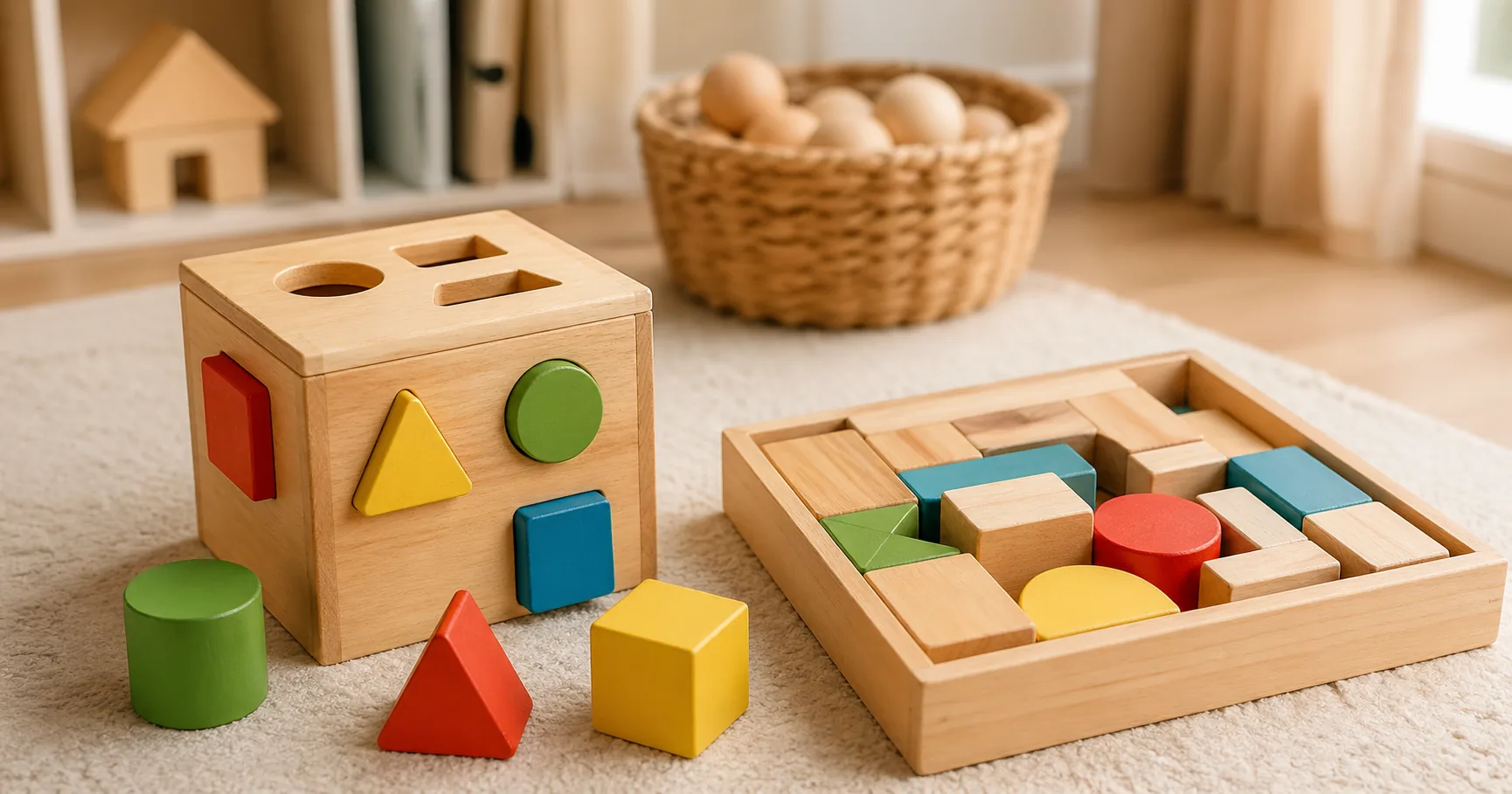
The Melissa & Doug Shape Sorting Cube is the toy a lot of parents remember from their own childhood, and it has the deepest review base of anything here. It’s a small hardwood box with cutouts on five sides and a generous set of brightly painted shapes; the child drops each shape through its matching hole, then slides the lid open to dump everything out and start again. Nothing electronic to fail, and it carries a comfortably high rating across a very large pool.
What it does better than the cheap versions is variety. Budget sorters give you a handful of basic shapes; this one includes the less obvious ones like a star, a hexagon, and a trapezoid, and that range is exactly what stretches the toy from “solved and boring at 18 months” to “still in play at four.” When the sorting gets too easy, the shapes become stacking blocks, which buys even more life out of it. The most common complaint is that the lid has no resistance and pops off if the cube tips, which frustrates some toddlers mid-game.
Skip this if your child has already mastered basic sorting; at that point the Pound and Roll Tower or the block set is a better use of the money.
M&D Shape Sorting Cube
The Melissa & Doug First Shapes Jumbo Knob Puzzle is the gentlest entry into puzzles and the most affordable toy here. It’s a wooden board with a handful of large cutouts and matching pieces, each topped with an oversized knob built for a chunky toddler grip. The piece count is deliberately small, which is the whole point at this age.
The detail that makes it work is the knob. Most toddler puzzles use little pegs that frustrate a one-year-old whose pincer grasp is still forming; the jumbo knobs are easy to lift from the start, which is why it works even before the first birthday for some kids. Each slot has the matching shape printed underneath, so a child can self-correct without a parent hovering. The honest limitation: the pictures are a printed laminate rather than painted wood, so a heavy chewer will eventually wear the artwork even though the board stays solid. The same maker offers all-wood painted versions at a similar price if that worries you.
Skip this if your child is already past three; the small piece count means they’ll outgrow it quickly and want a puzzle with more pieces.
M&D Jumbo Knob Puzzle
The Melissa & Doug Standard Unit Building Blocks set is the highest-rated toy in this roundup, and the one most likely to last a decade. It’s a generous set of smooth hardwood blocks in true “standard unit” proportions, the same kind used in early-childhood classrooms, packed in a wooden storage tray. Unlike most of this list, it isn’t a stage toy; it’s a long-term investment.
The proportions are the quiet genius. Standard unit blocks follow exact size relationships, so two of one size make another, four make a cube, and so on. That precision lets a toddler build things that actually stand up, and lets a parent slip in early counting and symmetry without ever calling it math. The blocks feel substantial, which signals the quality but also makes the full set heavy enough to be a stationary playroom toy rather than something you haul around. Owners routinely report it surviving multiple children with no real wear. The one recurring frustration: there are only a couple of the longest blocks per set, and siblings fight over them.
Skip this if you’re shopping for a child under about two and a half, or you need something portable; this is a heavy, stay-at-home set best suited to confident builders.
M&D Standard Unit Blocks
The Melissa & Doug Deluxe Pound and Roll Tower is the most affordable cause-and-effect toy here. It’s a vertical wooden tower with colored balls resting on internal ramps; the child pounds each ball through the top with the wooden hammer, then watches it bounce down the angled ramps and roll out the bottom. The sweet spot is around age two, old enough to swing a hammer with intent and young enough that the rolling never gets old.
Owners describe two phases of play: first pushing the balls through by hand, then graduating to the hammer once the coordination clicks. Both are fine, and both hold attention. The build is solid wood with rubber rings that give the pounding a satisfying resistance, and the balls are sized to keep the exit safe. Two honest drawbacks: the rubber rings soften after years of heavy use, so the balls eventually sit looser, and the hammer is a real wooden mallet that a determined toddler will absolutely swing at a sibling, so plenty of parents tuck it away between sessions.
Skip this if you already own the Pound & Tap Bench and your child has mastered the ball-drop idea; the two toys overlap, and the blocks would add more.
M&D Pound & Roll Tower
The Trade-Off Nobody Mentions
The honest tension in this category isn’t quality, since all five are well made. It’s that the cheaper, single-purpose toys win in the short term and the pricier open-ended set wins over years. A first puzzle or a sorter costs little and delights a toddler immediately, but it gets outgrown. The block set costs more and asks for patience, since a young toddler can’t do much with it yet, but it’s the one still in use when that child starts school and a younger sibling arrives.
If money is tight, that argues for buying one stage-appropriate toy now and saving the blocks for later rather than buying everything at once. If you’re outfitting a playroom you expect to use for years and through more than one child, the blocks are the anchor purchase and the rest are nice supplements.
Match the stage, not the calendar
A child who’s just grasping and dropping wants the jumbo-knob puzzle or the bench. A child who’s matching and fitting wants the sorter. A child who’s hammering and building wants the tower or the blocks. Buying ahead of the stage usually means the toy sits unused until they catch up.
Buy for storage
A big set of loose pieces is wonderful until you have nowhere to put them. The toys here with built-in containers, the sorter, the bench’s slide-out xylophone, and the blocks’ tray, reliably get more daily use than toys that scatter. If your playroom is already chaos, weight the choice toward the ones that contain themselves.
Mind the noise
Wooden toys are quieter than electronic ones, but a pounding toy first thing in the morning is not silent. The bench is the most musical of the bunch; the tower and bench both make real thunks. If anyone in the house is noise-sensitive, the sorter or the puzzle is the gentler starter. One last note: if you specifically need a travel toy, battery-powered lights and sounds, or a smooth transition for a child who’s only ever played with electronic toys, none of these is a perfect fit, though the bench’s xylophone gives enough audio feedback to bridge that last gap.
What age are wooden toys best for?
Most quality wooden toys target roughly one to five years. The jumbo-knob puzzle starts around a year, the pounding bench works from about a year through the preschool years, and the standard unit blocks stretch well into early grade school with creative use. Always follow the maker’s recommended age, since pieces sized for ages three and up are usually too small for younger toddlers and pose a choking risk.
Are name-brand wooden toys worth more than cheap ones?
For toys that get daily use over years, yes. The well-known sets here routinely survive multiple children, while cheap imported versions in the same style tend to warp or splinter within a year or two. For a one-off seasonal toy a budget brand is fine, but for the core pieces a child reaches for every day, the better-made ones pay off in how long they last.
Are wooden toys safer than plastic for toddlers?
Generally yes, when both meet safety standards. Reputable wooden toys use non-toxic, water-based finishes and skip the questionable plastics. The real risk with wooden toys is splinters or chipping paint on cheap imports, so buy from established makers and check the edges before first use. For a child who chews everything, prefer painted wood over printed laminate artwork, which wears faster.
How do I clean wooden toddler toys?
Wipe them with a damp cloth and a little mild soap, then dry right away. Never soak wood or put it in the dishwasher, since water warps it and lifts the finish. For deeper cleaning, a half-and-half vinegar-and-water mix works without harming the paint. Skip bleach and alcohol on painted surfaces, and on any piece with printed laminate, wipe lightly rather than scrubbing.
What's a good wooden toy for a first birthday?
The jumbo-knob puzzle is the most age-appropriate single gift for a one-year-old, since the oversized knobs suit hands that are still learning to grip. The pounding bench is the better pick if the child is already grasping firmly and copying what adults do. The two also pair well as a complete first-toy set if you want to give both.
Which one lasts the longest?
The standard unit block set, by a wide margin. The stage toys get outgrown within a year or two, but open-ended blocks keep finding new uses as a child grows, from simple stacking as a toddler to elaborate building in the school years. It’s the one purchase here most likely to serve more than one child.