
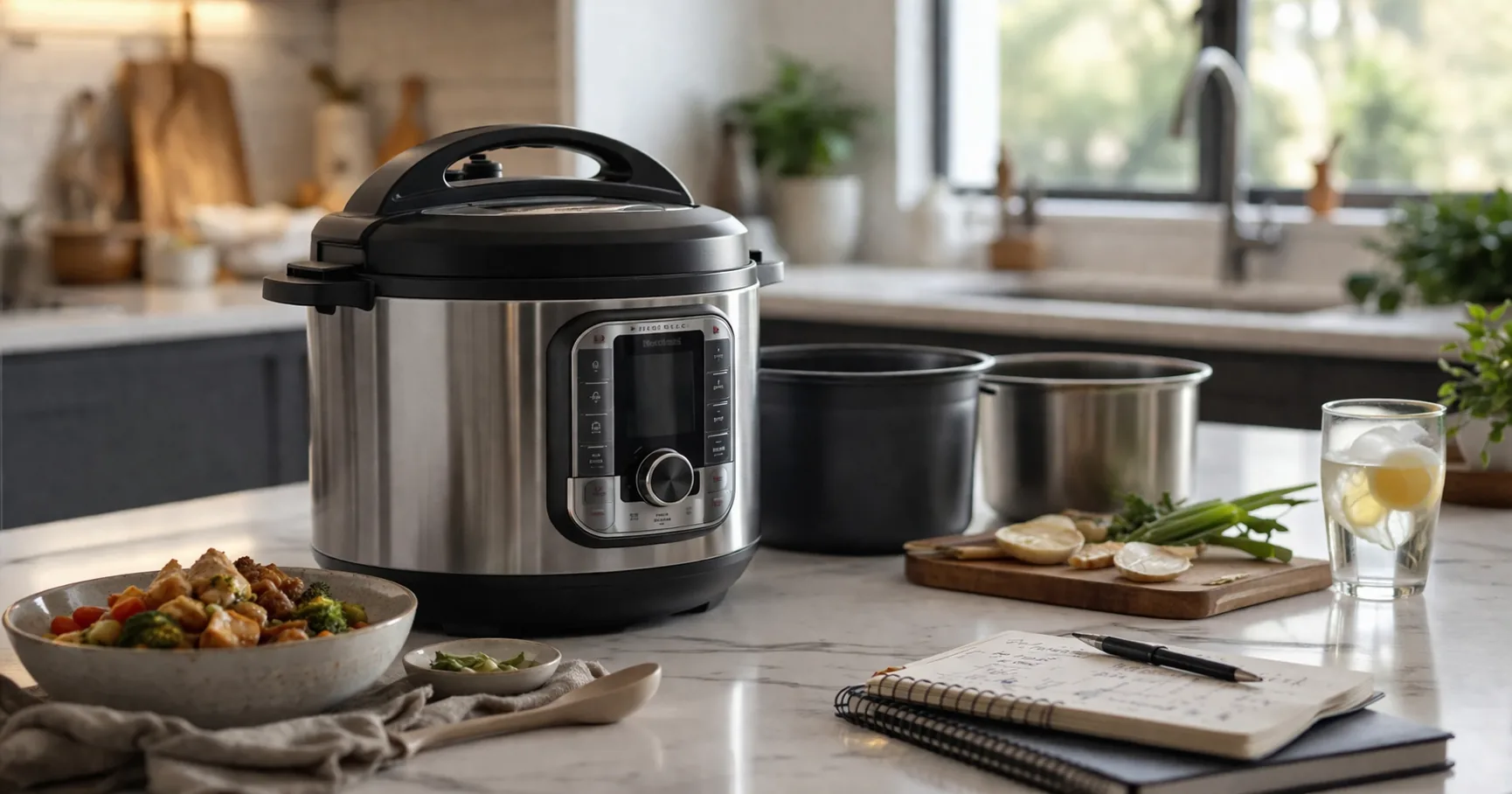
A few years ago the Instant Pot was the appliance everyone had to have. Now it’s the appliance everyone already owns, which raises a fair question: in 2026, is it still worth buying one, or has the hype curdled into a gadget that lives in the back of the cabinet?
The honest answer is that the Instant Pot earned its reputation and mostly still deserves it, but the buying decision has shifted. It’s no longer about whether a multi-cooker is useful. It’s about which size matches your kitchen, because that single choice is what separates a tool you reach for weekly from one you forget you own. Get the size wrong and even the best multi-cooker becomes counter clutter.
The model worth anchoring on is the classic Duo 7-in-1 in the 6-quart size. It’s the most-bought multi-cooker here by a wide margin, it’s the most family-friendly capacity, and it’s the cleanest test of whether the Instant Pot still belongs in a modern kitchen.
For most kitchens, the Instant Pot Duo 7-in-1 in 6 quart is still the one to buy. It covers pressure cooking, slow cooking, rice, steaming, sauté, yogurt, and warming in a size that suits a family, and it has the deepest track record of any multi-cooker on Amazon. If you want one safe default, start here.
First, What the Instant Pot Does Poorly
Before the praise, the honest limits, because they’re what decide whether it sits on your counter or in a closet.
The Instant Pot is not a fast cooker in the way the name suggests. Pressure cooking itself is quick, but the pot needs time to come up to pressure first and then time to release it, so a “quick” weeknight meal can still run longer than the recipe’s cook time implies. People expecting instant results are the ones most likely to feel let down.
It also asks for a short learning curve. The first few cooks involve getting comfortable with sealing, venting, and reading the cycle, and a sauté step still means standing at the pot rather than walking away. And it’s a single-job machine in practice: while it pressure cooks, it can’t do anything else, so it doesn’t replace a stovetop on a busy night. None of this is a dealbreaker, but it’s the reality behind the “does everything” marketing.
Who it’s for: anyone who wants one appliance to handle pressure cooking, slow cooking, rice, and a few other jobs, and who cooks for a household where a 6-quart batch makes sense. Who should skip it: solo cooks who’d rarely fill it, anyone who wants truly hands-off speed, and people whose cabinets are already overflowing with single-use gadgets.
The Duo 7-in-1 in 6 quart remains the easiest Instant Pot to recommend, and the reason is balance rather than any single standout feature. It has the deepest review history of any model here, the most mainstream size, and the full spread of core functions that made the category worth caring about: pressure cooking, slow cooking, rice, steaming, sauté, yogurt, and warming.
That combination is what makes it the buy-once choice. The 6-quart capacity handles a family dinner or a batch of soup without being so large it’s awkward to store, and the function set covers the overwhelming majority of what people actually do with a multi-cooker. You’re not paying for niche modes you’ll ignore. You’re paying for the version that does the common jobs well.
Its weakness is simply that it’s the standard. It doesn’t reinvent the experience the way the wider-base model tries to, so if you specifically want a roomier searing surface or a smaller footprint, the Duo isn’t tailored to either. But for the buyer who wants one reliable multi-cooker and no second-guessing, it’s still the right answer.
Best for: a first-time or replacement buyer who wants one dependable, family-size multi-cooker.
Instant Pot Duo 6 Qt
The Duo Plus 9-in-1 in 3 quart is the right call for one or two people, side dishes, or a kitchen where a full-size pot would be more capacity than you’ll ever fill. It keeps the multi-cooker appeal in a footprint that actually fits a small counter, and it layers in a few extra functions and clearer status-light guidance for a slightly more polished feel.
The trade-off is the whole story here: the compact size is both the reason to buy it and the reason to skip it. If you regularly cook larger portions or batch-prep for the week, you’ll outgrow it quickly and wish you’d bought the 6-quart instead.
Best for: solo cooks, couples, and small kitchens that don’t need family-size capacity.
Instant Pot Duo Plus 3 Qt
The RIO Wide in 7.5 quart is the most genuinely different option in this group because it changes the shape of the cooking, not just the badge. The wider base gives you more room to sear, sauté, and fit bulkier ingredients, which is a real workflow improvement if browning and roomy cooking matter to you. It still covers the core multi-cooker jobs, so you’re not trading away the basics for the format.
The caution is twofold: it takes up more counter and storage space, and it has a much shorter track record than the long-proven Duo. That makes it a targeted choice for someone who already knows the standard tall pot feels cramped, rather than a safe default for a first-time buyer.
Best for: experienced multi-cooker users who want a roomier base for searing and larger meals.
Instant Pot RIO Wide 7.5 Qt
So, Is the Instant Pot Still Worth It?
Yes, for most kitchens, with one caveat: buy the size that fits how you cook, not the one with the most functions on the box. The core promise still holds. One appliance handles several common jobs and saves you a cluttered cabinet of single-use gadgets. The Duo 7-in-1 in 6 quart remains the safest answer because it nails the common case.
The real decision isn’t whether to buy an Instant Pot, it’s which one. Choose the 6-quart Duo if you want a dependable default, the 3-quart Duo Plus if you cook small, and the RIO Wide only if you specifically want the roomier base and are fine trading some proven track record for it. Match the size to your kitchen and the Instant Pot still earns its counter space in 2026.
Is the Instant Pot still worth buying in 2026?
For most households, yes. The core value holds up: one appliance covers several common cooking jobs and saves cabinet space. The key is buying the size that matches how you actually cook rather than chasing extra functions.
Which Instant Pot size should I get?
The 6-quart Duo suits most families and is the safest default. Choose the 3-quart Duo Plus for one or two people, and the 7.5-quart RIO Wide only if you want a roomier base for searing and larger meals.
Is the Instant Pot actually fast?
Pressure cooking is quick once it’s going, but the pot needs time to come up to pressure and to release it, so total time can run longer than the recipe’s cook time suggests. It saves effort more than raw minutes.
Is there much of a learning curve?
A short one. The first few cooks involve getting used to sealing, venting, and reading the cycle. After that it becomes routine, but it’s worth knowing it isn’t fully set-and-forget on every recipe.
Should I buy the cheapest Instant Pot?
Not by default. Buy the size that fits your cooking. A cheaper small model is a false economy if you regularly cook for a family, and an oversized one wastes space in a small kitchen.