
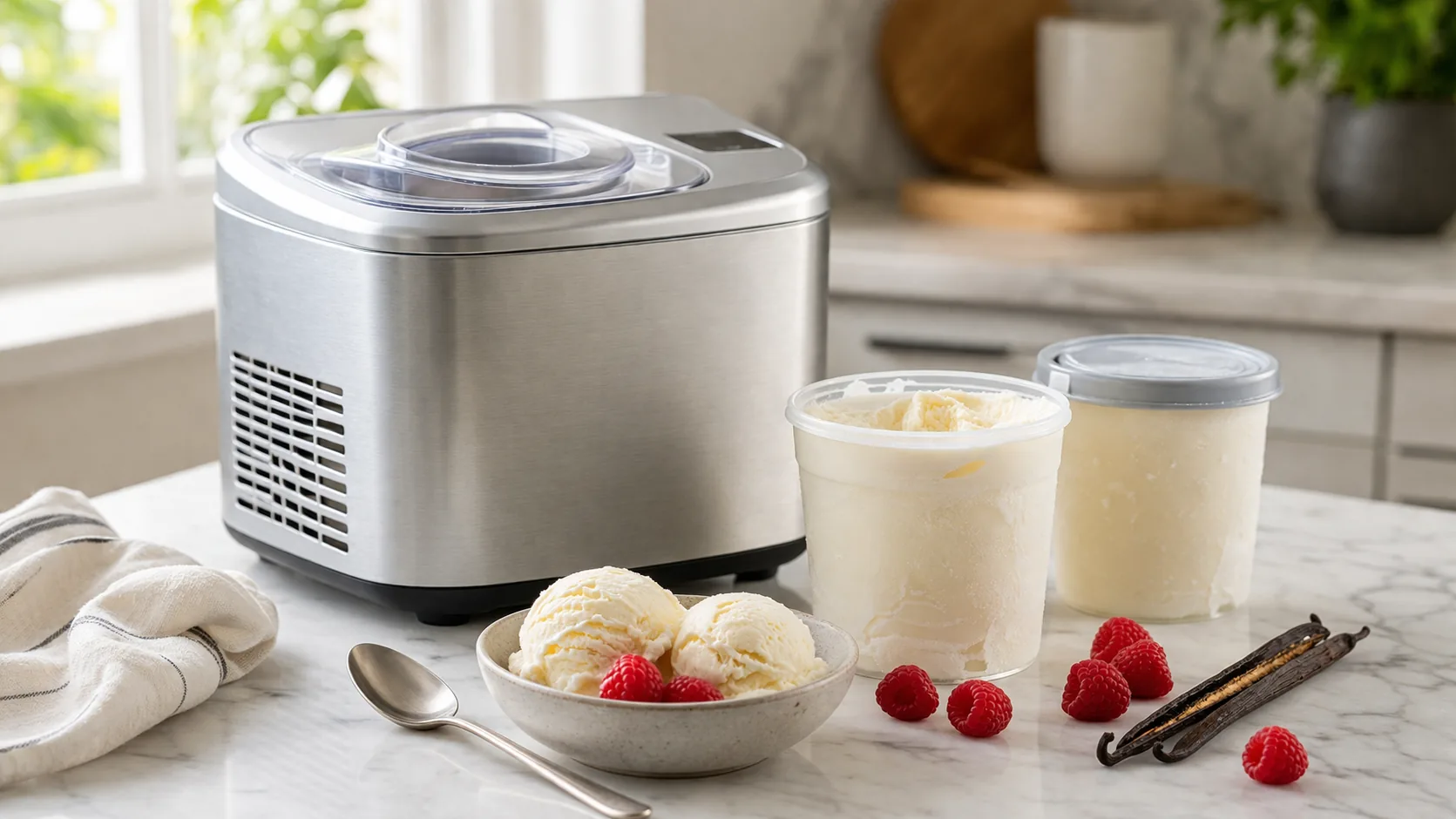
The Ninja CREAMi has been one of the most argued-over kitchen gadgets of the last few years, and the arguments tend to talk past each other. One camp swears by it, building whole recipe routines around protein ice cream and dairy-free sorbet. Another camp finds it loud, fussy, and oddly limited for the money. Both are right, which is exactly why a flat yes-or-no recommendation misses the point. The CREAMi is a genuinely unusual machine, and whether it’s worth it depends almost entirely on how you’d actually use it.
So this review is built around that question rather than a score. The honest summary up front: the CREAMi is worth it, but only if you understand precisely what you’re paying extra for, and only if its routine fits how you cook. It is not a casual, spontaneous dessert machine, and it is not quiet. What it is, instead, is the most flexible home tool there is for turning ingredients you control into smooth frozen treats. Here’s where it shines, where it frustrates, and who should skip it for something simpler.
The Ninja CREAMi NC301 is the pick for customizable frozen treats: seven programs, the brand’s blade-shaving process, and unmatched flexibility for dairy-free, keto, and high-protein recipes. Just know the trade-offs, the overnight freeze, the noise, and the icy-edge re-spin, before you buy.
What the Ninja CREAMi Actually Does
Most ice cream makers work one way. You pour a liquid base into a chilled bowl and the machine churns it as it freezes. The CREAMi does something different, and understanding that difference is the whole key to deciding whether it suits you.
Instead of churning liquid, the CREAMi shaves a fully frozen block. You prepare a base, pour it into a pint container, and freeze it solid overnight. The next day the machine drives a fast-spinning paddle straight down through that frozen block, shaving and aerating it into a smooth, scoopable texture in a couple of loud minutes. The approach is borrowed from a commercial restaurant machine that costs many times more, scaled down for the counter.
That single design choice changes how the machine fits your life. You can’t decide at seven in the evening to have ice cream by half past. You prepare the base the night before, freeze it, and process it the next day. For spontaneous dessert cravings, that’s a real limitation. For anyone who meal-preps or plans ahead by habit, it barely registers.
The NC301 runs seven programs, including ice cream, lighter ice cream, sorbet, gelato, milkshake, smoothie bowl, and a mix-in cycle, each tuned to a different combination of speed and pressure. The mix-in program is one of the more distinctive touches: after the first cycle, you push down into the finished pint to fold in crushed cookies, candy, brownie chunks, or fruit. Owners who use it tend to call it one of the most enjoyable parts of the machine.
Where It Falls Short
It’s worth leading with the weaknesses, because they’re the things first-time buyers most often don’t expect.
The most cited issue is even coverage. The paddle can’t fully reach the very edges and bottom of the pint, so the outer ring sometimes stays icy and unprocessed even after a complete cycle. The fix is simple but real: scrape the sides and run a second re-spin cycle, which adds another minute or two. Experienced owners build this into their routine automatically. Newcomers are often caught off guard the first time.
Then there’s the noise. Shaving through a frozen-solid block at full power is genuinely loud, on the order of a couple of minutes that owners frequently compare to a garbage disposal. In a small apartment, early in the morning, or near sleeping kids, that’s worth taking seriously. It won’t stop most people from buying, but it is not a quiet appliance, and no setting makes it one.
The overnight freeze is the third catch. The base has to be frozen solid all the way through, which rules out same-day decisions entirely. And the pint size is modest, closer to one or two servings than a family tub, so a household of four ends up running several pints and buying extra containers. None of these are dealbreakers for the right owner, but together they define who the CREAMi is not for.
Where It Shines
At its best, the CREAMi turns ingredients you fully control into remarkably smooth frozen treats, and that’s its real edge over both store-bought tubs and most traditional makers. Owners routinely make protein ice cream, keto sorbet, dairy-free coconut gelato, low-sugar frozen yogurt, and high-fiber smoothie bowls, all from one machine, all from scratch.
The texture from the center of a well-prepared pint is the part that wins people over. A good base comes out creamy and dense in a way that’s hard to believe came from a home appliance, and the program list gives you real range across ice cream, gelato, sorbet, and more. The mix-in cycle adds a layer of play that no churn-style maker offers, letting you fold solid pieces right into the finished pint.
There’s also a community effect that genuinely matters here. A large, active recipe community has grown up around the machine, with thousands of tested bases sorted by diet and difficulty, so you’re rarely starting from a blank page. For someone who likes to tinker with protein powders, alternative milks, and custom sweeteners, that shared knowledge turns the CREAMi from a gadget into a hobby. That enthusiasm is the clearest signal that, for the right owner, the flexibility outweighs the quirks.
The CREAMi holds a strong rating, which is notable for a specialty appliance that costs well more than a basic churn-style maker. The pattern behind that rating is clear: the people who love it use it often and build routines around protein desserts, dairy-free recipes, and custom mix-ins, while the people who don’t tend to repeat the same two complaints, the noise and the extra effort when a pint needs a re-spin.
What the positive feedback really shows is a level of use that goes well past occasional ice cream. Owners describe protein desserts as a near-daily habit, dairy-free alternatives that match or beat store-bought, smoothie bowls as a meal-prep staple, and mix-in combinations no commercial tub replicates. The critical feedback deserves equal weight: the icy-edge issue is real, the noise is real, and a smaller number of owners mention paddle wear or an early failure, which stings more on a premium machine than a cheap one. Even so, the overall rating stays high enough to show most owners feel the flexibility and results are worth the trade.
Ninja CREAMi NC301
If you want classic homemade ice cream without the CREAMi’s complexity, noise, or premium price, the Cuisinart ICE-21 is the answer, and it’s one of the most proven small kitchen appliances in this category. It works the traditional way: freeze the double-insulated bowl ahead of time, pour in your liquid base, switch it on, and it churns and freezes together over about twenty minutes into a generous batch with a classic soft-serve texture you can firm up in the freezer.
Where it beats the CREAMi is batch size, price, and even texture. The churn method processes evenly from edge to center, so there’s no icy rim and no re-spin, it’s much quieter, it makes roughly three times the volume in a cycle, and it costs a good deal less, with a long warranty behind it. The trade is flexibility. It makes excellent cream-based ice cream but wasn’t engineered for high-protein, keto, or dairy-free bases the way the CREAMi was, and thin low-fat bases tend to come out icier. You also need the bowl pre-frozen, though that’s a shorter wait than the CREAMi’s overnight requirement.
Cuisinart ICE-21
Frequency and variety favor the CREAMi
If frozen treats are a regular habit and you like experimenting with protein powder, alternative milks, unusual fruits, and custom sweeteners, the CREAMi gives creative range a churn maker can’t touch, and the active recipe community means you’re never guessing from scratch.
Simplicity and batch size favor the Cuisinart
If you want dependable homemade ice cream for a household a few times a week, the ICE-21 delivers excellent results with less planning, less noise, and far more volume per cycle, and the lower price makes the cost-per-use add up faster. There’s no scenario where the Cuisinart is the wrong call if your goal is straightforward homemade ice cream, and no traditional maker that handles a keto sorbet or dairy-free smoothie bowl the way the CREAMi does. They solve genuinely different problems. One practical tip if you go with the CREAMi: buy a couple of extra pint containers right away, since the included pints limit you to two flavors per session, and regular users generally like having several on hand.
What's the most common complaint about the Ninja CREAMi?
Two things come up repeatedly. First, the paddle can’t fully reach the edges and bottom of the pint, so the outer ring can stay icy and usually needs a quick scrape and a second re-spin cycle. Second, it’s loud while it runs. Neither is a dealbreaker for most owners, but both are worth knowing before you buy, especially if you want zero-effort results or live somewhere noise carries.
How loud is the Ninja CREAMi?
Loud. Shaving a frozen-solid pint at full power produces a couple of minutes of noise that owners often compare to a garbage disposal. If you live in an apartment with thin walls, share a wall with a sleeping child, or are sensitive to kitchen noise, factor that in seriously before buying.
Do I really have to freeze the base for a full day?
Yes, and it’s not optional. The machine works by shaving a base that’s frozen solid all the way through. If it isn’t fully frozen, the paddle can’t process it correctly and the result comes out icy or chunky. Plan on freezing overnight, with some owners preferring a bit longer for the smoothest texture. This is why the CREAMi doesn’t suit spur-of-the-moment desserts.
What's a good base recipe for beginners?
A classic vanilla is the simplest start: about a cup of heavy cream, a cup of whole milk, a few tablespoons of sugar, and a teaspoon of vanilla. Mix, pour to the fill line, freeze overnight, and run the ice cream program. From there, large online recipe collections cover high-protein, dairy-free, and keto versions sorted by difficulty.
Is the larger Deluxe model worth upgrading to?
The Deluxe adds a few more programs, a bigger pint format, and a slicker look, which can make sense for heavy users who want more variety and larger servings. For most buyers, the standard NC301 already covers the core uses well before spending more on the Deluxe.
Can the Ninja CREAMi make dairy-free ice cream?
Yes, and it’s one of its biggest strengths over churn-style makers. Coconut, oat, almond, and cashew milks all work as base liquids. The trick is getting enough fat and sugar for a creamy result, since thin, low-fat bases come out icier on any machine. The lighter ice cream and sorbet programs are tuned for lower-fat and non-dairy bases.
How does the Cuisinart handle dairy-free bases by comparison?
It can make them, but it’s fussier about fat and consistency than the CREAMi. Because its churn method is built around cream-based recipes, thin or low-fat dairy-free bases tend to come out icier. The CREAMi’s blade-shaving approach is more forgiving for non-traditional bases, which is part of what you pay extra for.