
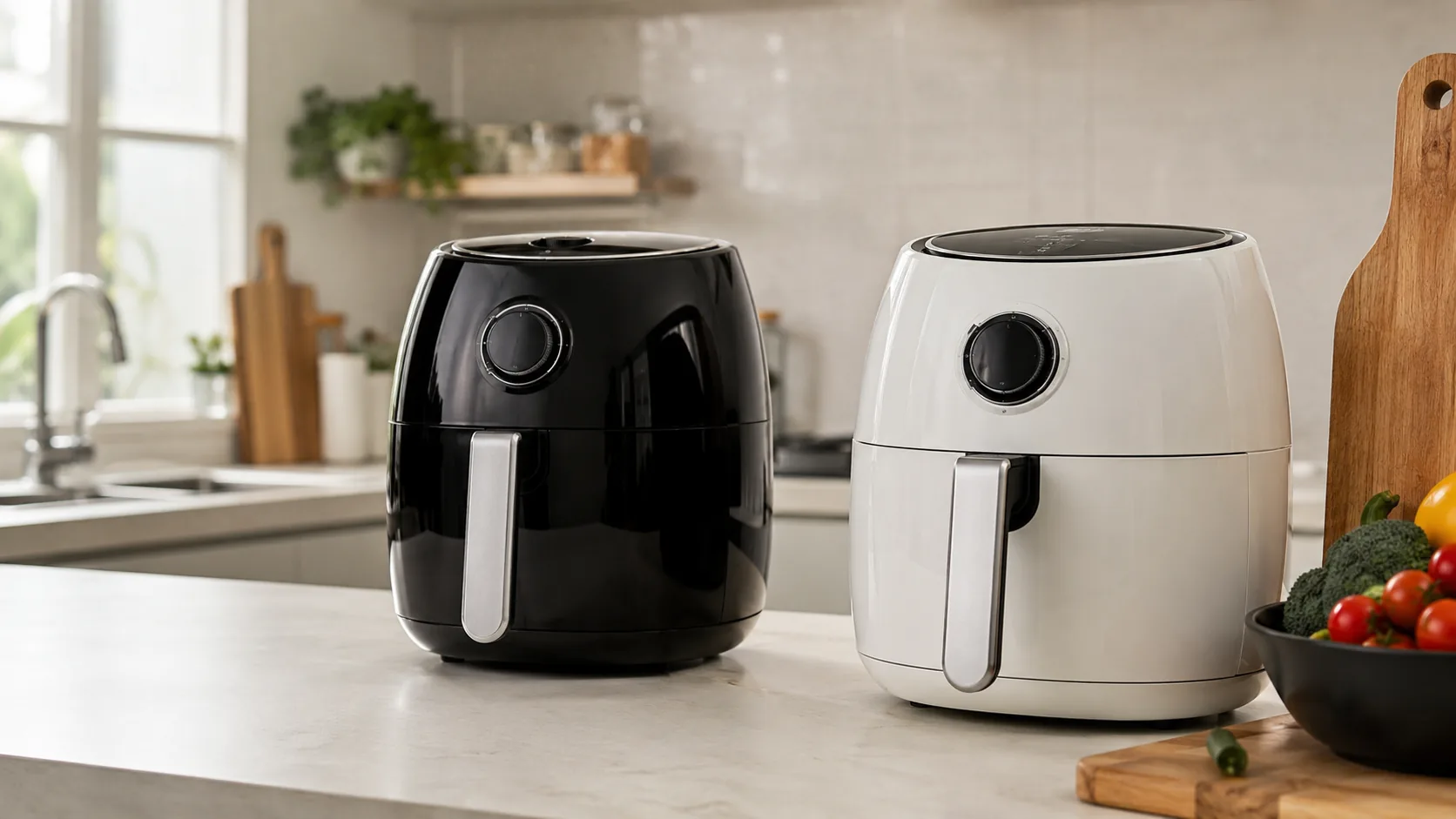
It used to be an easy comparison. Ninja was the household name with countless reviews behind it, and Cosori was the upstart trying to make the same shape of machine for the same money. That is no longer the shape of this matchup. Both pairs sit at the same compact size and the same price, but the way owners have voted with their feedback has flipped a few of the old assumptions about which one is the “safe” pick and which one is the upgrade.
So this comparison turns on the few things that actually differ inside a small basket air fryer at this price. How many cooking modes you really want, how hot it can go, what the inside is coated with, and how complicated you want the controls to be. Pick on those and the right buy falls out cleanly.
The pick for most people: the Cosori. At the same money it carries a higher owner rating, more cooking modes, the wider heat range, and a coating free of older nonstick chemistry. The Ninja wins on simplicity and brand familiarity, not specs.
When the Cosori is the right buy
Choose the Cosori if you want a single machine to actually do a few things well. It covers more cooking modes than the Ninja, with the widest heat range in this size class, which means it handles gentle reheating at one end and proper high-heat crisping at the other. Its coating is the easy-clean ceramic style without the older nonstick chemistry, which is a small thing day to day and a real one over years of cleaning. And the owner rating is the highest in the small air fryer category, which is the strongest single signal you can read about how it ages.
It is also the slightly more capable everyday cooker. The extra modes are not stickers; the bake and broil settings genuinely work, and the higher top temperature is the practical difference between food that gets crispy and food that just gets cooked. For somebody buying their first or only air fryer and willing to learn a few buttons, this is the more flexible answer at the same price.
When the Ninja still makes sense
The Ninja is the pick for the kitchen that just wants air fry plus reheat, no fuss, and a name on the front that feels familiar. It runs a smaller set of modes by design, and that simplicity is its strength. The basket and the crisper plate drop into the dishwasher cleanly, and the brand’s customer service has the longest track record in the category for warranty replacements when something does go wrong.
The footprint runs a touch smaller in places that matter, which is genuinely useful on the tightest counters, and it is the one some buyers will already half-know how to use before they unbox it. If you have only ever wanted an air fryer to crisp frozen things and reheat last night’s pizza, this is the calmer, simpler answer, and you will not feel like you missed anything.
The tie-breakers
When you are torn at the same price, these decide it:
- How much you will cook. Three or four different things a week? Cosori, for the modes. Mostly air fry and reheat? Ninja, for the simplicity.
- Heat range. Cosori reaches noticeably higher and lower than the Ninja, which is the difference between crisping food properly and merely browning it.
- Coating. Cosori uses the easy-clean ceramic style without older nonstick chemistry. Ninja does not make that claim. If that matters to you, Cosori is the clear pick.
- Brand familiarity and service history. Ninja has the longer track record for warranty support and parts. Cosori has caught up on product quality but has a shorter U.S. service tail.
- Counter footprint. Ninja is slightly tighter in the spots that count for very small kitchens. Cosori is taller and narrower for a comparable floor area.
The Ninja is the everyday answer for a kitchen that wants the air fryer to crisp frozen things and reheat leftovers without inviting a relationship with a button panel. Four modes covers what most households use anyway, the basket and the crisper plate drop in the dishwasher cleanly, and the small footprint slips into a corner or onto a shelf. Brand-wise it carries the longest customer-service track record in the category, which matters when something does eventually go wrong years from now.
The trade-off is that the spec sheet is shorter than the Cosori at the same money. Fewer modes, a slightly lower top temperature, and no claim about the coating. None of that ruins it for the simple cooking it is built for. If you have ever bought a kitchen gadget with a lot of modes and used three of them, this is the calmer purchase.
Ninja Air Fryer 5 Qt
The Cosori is the more capable machine at the same money, and the rating from owners reflects it, sitting at the top of the small air fryer category. Inside the same compact body it offers more modes, a wider heat range from gentle reheats to genuine crisping, and a slightly larger basket thanks to a taller, narrower shape. The coating is the easy-clean ceramic style without the older nonstick chemistry, which is a real comfort over years.
A few extra modes mean a slightly longer learning curve in the first week, and a brand that is newer in U.S. kitchens than Ninja, which translates to a shorter service tail if something needs warranty work years down the line. Neither is much of an obstacle. For a buyer who wants the small air fryer to handle a real range of food and is willing to learn two more buttons, this is the smarter purchase.
Cosori TurboBlaze 6 Qt
Which one should you buy?
For most people, the Cosori is the right buy at this price. The owner crowd has settled on the higher rating, the modes are useful rather than decorative, the heat range is the genuine working difference between crispy and cooked, and the cleaner coating is something you will appreciate years from now. Brand familiarity is a real thing for some people, and that is the case the Ninja still wins; otherwise the spec advantages now point the other way.
Buy the Ninja if you want the air fryer to be a quiet, simple kitchen tool that crisps frozen food and reheats leftovers without a lot of fuss, or if you specifically value the longer customer-service track record. It will not be the most flexible machine on a counter, but it will be the calmest one. Either way you are getting a perfectly capable small air fryer; the choice is mostly about how much range you actually want from it.
Is Cosori or Ninja the better air fryer brand?
At this size and price, Cosori has caught up and pulled ahead on the specs that matter, with a higher owner rating, more modes, a wider heat range, and a cleaner coating. Ninja still leads on long-term customer service and brand familiarity. Both are reliable picks; the choice is about what kind of cooking you actually do.
Does the coating chemistry really matter?
For health-conscious buyers, yes. The older style of nonstick coating uses a chemistry whose long-term exposure has raised concerns over the years, and the easy-clean ceramic style avoids it entirely. Cosori specifically advertises that its coating is free of those compounds; Ninja does not make the claim either way.
Why does Cosori now have the higher rating despite fewer reviews than the Ninja line as a whole?
Cosori entered the U.S. market more recently, so its review pool for any single product is younger and smaller. But the consistency of the high rating, holding above the Ninja at the same size and price, is the strongest signal that the build quality is doing the work rather than the brand name.
Which has better customer service?
Ninja has the longer track record for warranty support and parts in the U.S., which is worth something a few years into ownership. Cosori has been responsive in the reports you can read from buyers who needed replacements, but the service tail is younger, so if warranty risk weighs heavily on you, Ninja is still the safer pick.
Should I pay this much for either, or step up to a larger model?
For one to three people, this size and price is the sweet spot, and the modes and coating are the most meaningful upgrades over going bigger. Step up only if you regularly need to cook for more people in a single batch or you want a two-zone design to handle a main and a side together.