
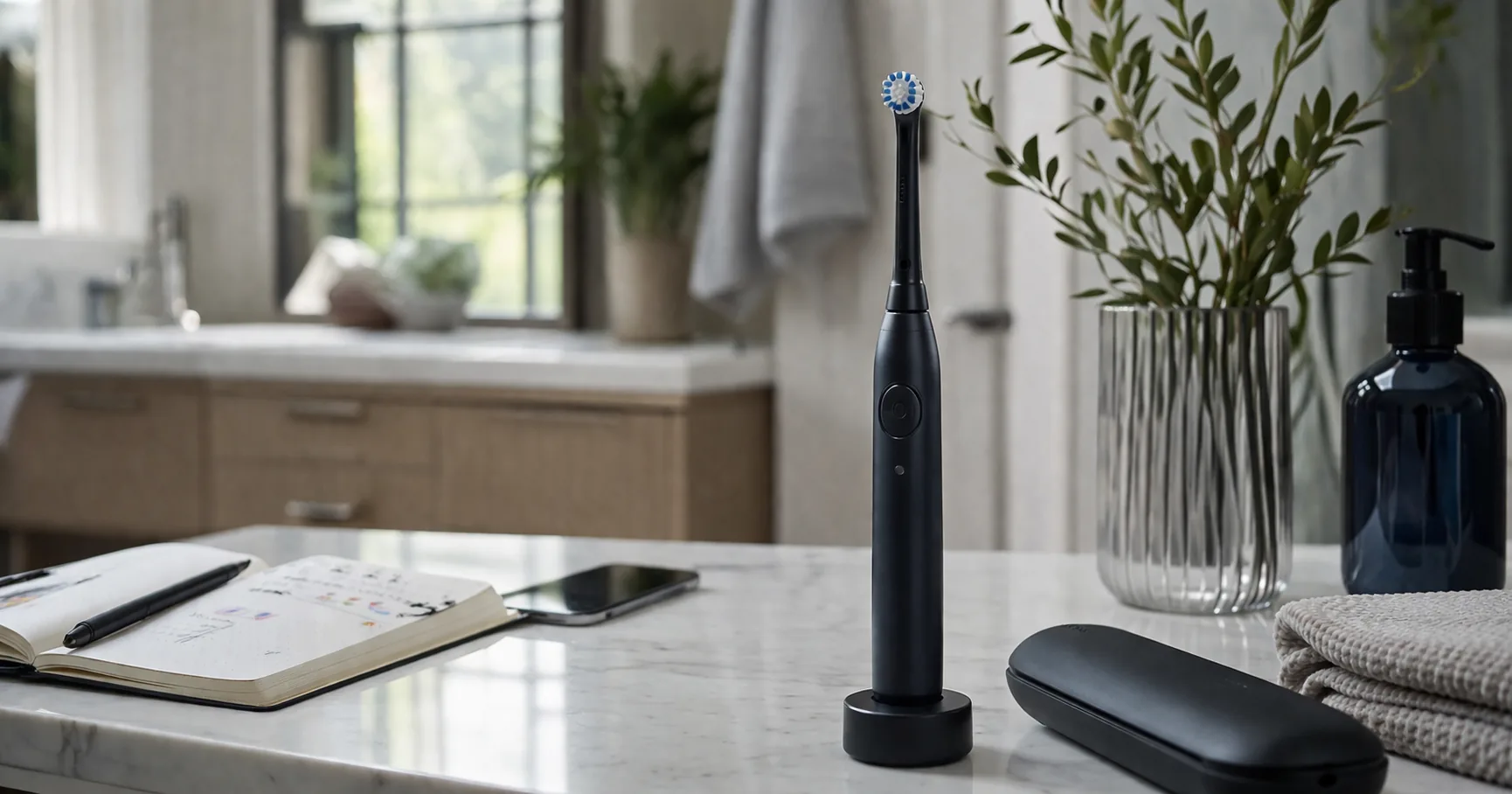
The Oral-B iO doesn’t have a cleaning problem. It has a pricing problem, or more precisely, a “which one do I actually buy” problem. The lineup runs from an approachable entry model up to versions that cost more than double, and the marketing is happy to let you assume the dearest one is the right one. It usually isn’t.
So this review is less about whether the iO cleans your teeth well, it does, and more about where the upgrade stops being worth the money. The honest answer changes depending on what you’re brushing with today. If you’re coming off a manual brush or a basic battery-powered one, almost any iO will feel like a leap. If you already own a decent electric brush, the gains get subtle fast.
The model worth anchoring on is the iO3. It’s the most-bought of the three here, it sits at the friendly end of the range, and it’s the cleanest test of whether the iO experience is worth paying for at all.
The Oral-B iO3 is the one to start with. It carries the iO essentials most people actually feel, a gentle brushing action and a pressure sensor that warns you when you’re scrubbing too hard, without pushing you into premium-tier spending. If you want the iO experience without overbuying, this is the pick.
First, What the iO3 Does Poorly
Start with the weak spots, because they’re the part the product page won’t volunteer.
The iO3 is the practical tier, not the showcase tier. It skips the onboard display and the app tracking that the pricier iO models lean on, so if you want a screen telling you which quadrant you’ve missed or a phone app charting your brushing streak, this isn’t that brush. It gives you a few cleaning modes and a pressure warning, and that’s the honest extent of the smarts.
It’s also a refinement of electric brushing, not a reinvention of it. The gentler feel and the pressure feedback are real, and gum-conscious brushers notice them, but nobody should expect a dramatic before-and-after if they’re already using a competent electric brush. A small share of owners also report a unit that fails earlier than they’d like, which is worth keeping in mind even though most report years of trouble-free use.
Who it’s for: anyone moving up from a manual or basic battery brush who wants the iO feel and pressure protection without paying for screens and apps they won’t use. Who should skip it: brushing-data enthusiasts who genuinely want the display and app coaching, and anyone already happy with a good electric brush, where the upgrade is too subtle to justify.
The iO3 earns the lead spot here because it pairs the widest buyer base in this group with steady satisfaction, and it does it without asking for premium money. It’s the model that best answers the real question shoppers have: does stepping into iO actually feel worth it? For most people coming from a simpler brush, the answer is yes.
What you get is the core of the iO experience. A few cleaning modes cover everyday brushing and gentler gum care, and the visual pressure sensor lights up when you bear down too hard, which is genuinely useful for anyone who tends to overscrub. Two brush heads and a travel case round out the box, so it’s ready to use and easy to take on trips without buying extras first.
What you don’t get is the flash. There’s no screen and no app, and the feature set is deliberately practical rather than premium. That’s the right trade for most buyers, but it does mean the iO3 is best judged on feel and fundamentals, not on gadgetry. Owners who came from manual or older electric brushes consistently describe the daily experience as noticeably smoother and more controlled.
Best for: first-time iO buyers who want the gentler brushing feel and pressure protection without overpaying.
Oral-B iO3
The iO5 is the natural next rung for buyers who want a little more without leaping to the top. It adds more cleaning modes and a whitening focus on top of the same pressure-protection foundation, and it ships with extra brush heads and a travel case. It’s the pick for someone who knows they’ll use more than the basics but doesn’t care about an onboard screen.
The added modes are the main reason to choose it over the iO3. If you switch between gentle, deep, and whitening routines, having them built in is convenient. If you’d only ever use one mode, the upgrade is harder to justify, and the iO3 covers you fine.
Best for: buyers who want extra cleaning modes and a whitening option but don’t need a display or app.
Oral-B iO5
The iO Series 7 Deep Clean + Protect is where the lineup turns premium. It’s the highest-rated model in this group, and it adds the features the cheaper tiers leave out: app support that tracks your brushing and an onboard display that makes choosing a mode easier. For someone who genuinely engages with brushing feedback, that turns a chore into something closer to a habit they’ll stick with.
The catch is cost. This tier sits well above the others, so it only makes sense if the display and app coaching will actually change how you brush. If you’d ignore the data after the first week, you’re paying for features you won’t use, and the iO3 or iO5 will serve you better for less.
Best for: buyers who want brushing data, app coaching, and a display, and will genuinely use them.
Oral-B iO Series 7
Is the Oral-B iO Worth the Upgrade?
For most people, yes, with one condition: buy the tier that matches your routine and stop there. If you’re stepping up from a manual or basic electric brush, the iO feel and pressure protection are a real improvement, and the iO3 delivers that without overspending. The lineup has enough buyers behind it to show the upgrade is more than marketing.
The trap is assuming the most expensive model is automatically the best buy. It isn’t. The display and app on the premium tier only earn their keep if you’ll use them, and the extra cleaning modes on the mid tier only matter if you’ll switch between them. Match the model to how you actually brush, and the iO is easy to recommend. Buy by price tag alone, and you’ll either overpay or feel shortchanged.
Is the Oral-B iO worth the upgrade?
For most buyers moving up from a manual or basic electric brush, yes. The gentler feel and pressure protection are a genuine improvement. The key is picking the tier that fits your routine rather than defaulting to the priciest model.
What is the biggest benefit of moving to the iO lineup?
It’s not a dramatic new brushing concept. It’s a smoother, more controlled daily experience built around better pressure feedback and a more refined feel than basic electric brushes offer.
Should I buy the cheapest Oral-B iO model?
Often, yes. The entry iO3 covers the features most people actually use. Only step up if you specifically want extra cleaning modes or app and display features you’ll genuinely engage with.
Are the more expensive iO models always better?
No. Higher tiers add modes, a display, and app tracking, but those only help if they change how you brush. Past the features you’ll actually use, the returns drop off quickly.
How do I decide between the iO3, iO5, and Series 7?
Start with the iO3 if you want the essentials. Choose the iO5 if you’ll use multiple cleaning modes and a whitening option. Go to the Series 7 only if a display and brushing-tracker app will genuinely keep you brushing better.