
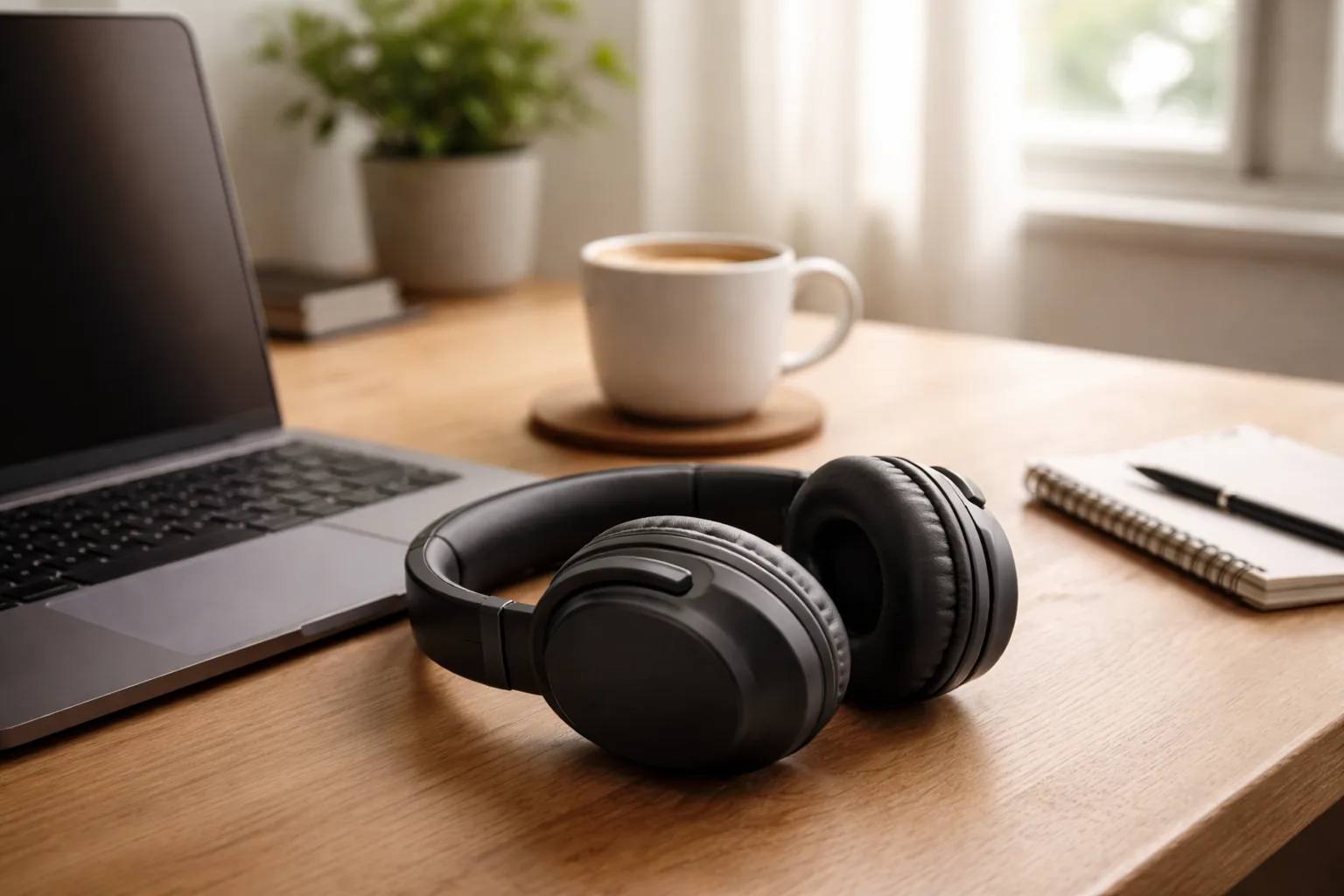
The Sony WH-1000XM5 launched as a premium headphone and priced accordingly. When the XM6 arrived, the XM5 started appearing at noticeably reduced prices, and that has created a genuine buyer’s question: is a discounted XM5 actually a good deal, or is this the classic pattern of older stock moving at clearance prices because the hardware has been superseded?
The honest answer is that it depends on what you need the headphones to do. The XM5 is still a capable headphone. It is not obsolete. But it competes now with three strong alternatives at various price points: the newer XM6, Sony’s own bass-forward ULT Wear, and the Bose QuietComfort. The right choice among them turns more on use case than on which one is currently discounted. This guide covers how to evaluate an XM5 deal when you see one, and how the four headphones compare for the main scenarios buyers are choosing between.
The Sony WH-1000XM5 is still the right pick for most buyers focused on noise cancellation and call quality at a lower entry point than the XM6. When it drops in price, the per-capability value is real. Use the guidance below to tell a genuine discount from an inflated-anchor one.
The Sony WH-1000XM5 was, for a year or two after launch, the clearest recommendation in the premium wireless noise-canceling category. Its combination of effective ambient isolation, clean call quality, and long battery life with ANC on set a bar that competitors spent years trying to match. With the XM6 now available, the XM5 has settled into a role as the value entry point to Sony’s flagship line, a capable and mature headphone that is no longer the newest but has years of real-world use data behind it.
The eight-microphone array and dual processor setup handle voice isolation well, and owners who wear them in open-plan offices or on commutes consistently describe the call clarity as the feature that distinguishes these from cheaper alternatives. Battery life with active noise cancellation running is still competitive at this price range. The earcups have memory foam and the headband is relatively light, making long sessions manageable for most people.
The main caveat that shows up repeatedly in long-term feedback is the carrying case. Unlike the XM4, the XM5’s case doesn’t fold the cups inward, making the case less compact in a bag. The XM6 addressed this. It’s a minor inconvenience for daily users and a real one for frequent travelers who optimize packing space.
Skip this if the folding case matters for how you travel, or if you want the strongest available low-frequency noise cancellation and the XM6 is within your budget.
Sony WH-1000XM5
The Sony WH-1000XM6 is the current flagship and addresses the most-cited hardware complaint about the XM5: the case is back to folding, so it packs more compactly. The noise cancellation processor is a newer generation, and Sony reports meaningful improvements in low-frequency isolation, which matters most on planes and in environments dominated by mechanical hum rather than voices. Bluetooth 5.3 with LE Audio support is present for future compatibility, and the microphone array expanded.
In everyday use (commutes, home office, casual listening), the difference between the XM5 and XM6 is narrower than the price gap suggests. The XM6 costs considerably more than a discounted XM5, and for most buyers the upgrade is driven by wanting the newest hardware or by the folding case specifically rather than by a noise-cancellation gap they’ll notice daily.
The review pool for the XM6 is still relatively shallow compared to the XM5. Early ratings trend slightly higher than the XM5 at the same point in its cycle, but long-term reliability data is still accumulating. Buyers who want the most current Sony technology and aren’t constrained by the price premium should consider this. Everyone else should weigh whether the improvements are worth the significant additional spend.
Skip this if you’re buying primarily for everyday commute and office use where the XM5’s ANC is already plenty, or if the price difference puts real strain on your budget.
Sony WH-1000XM6
The Sony ULT Wear targets a different priority than the XM5: more bass, longer battery without ANC, and a lower price point. The defining feature is a dedicated ULT button that cycles through two levels of bass enhancement, from a subtle lift to a heavier low-end emphasis that shifts how bass-forward genres hit. It uses a single-chip noise cancellation setup rather than the dual-processor system in the XM5, so the ambient isolation is present but measurably less effective in demanding environments.
Battery life without ANC is notably longer than the XM5, which matters for buyers who mostly listen to music at home or in relatively quiet settings and want to stretch charge cycles. For commuters and office workers who need consistent ANC performance throughout a workday, the XM5’s dual-processor system earns its place.
Buyers who moved from the XM4 or XM5 to the ULT Wear for primarily musical listening generally report satisfaction. Those who wear headphones in loud transit environments or open offices tend to notice the ANC gap. The ULT Wear is a good headphone for what it is; the question is whether noise cancellation is central to your use case.
Skip this if you spend significant time in loud commuting environments or open offices where strong ANC is the main reason you’re buying premium headphones.
Sony ULT WEAR
Bose built its premium headphone business on two things: noise cancellation and fit. The QuietComfort delivers on both, earning the highest owner rating of any headphone in this group and a review pool that now rivals the Sony XM5 in size. The clamping force is lighter than on either Sony flagship, the earcups are larger, and buyers who wear headphones for long periods (long flights, full workdays, back-to-back calls) consistently naming the Bose as the one that doesn’t create pressure or heat fatigue over hours of wear.
On noise cancellation, the Bose is particularly effective at low-frequency mechanical noise, which is most noticeable on planes and near HVAC systems. Voice isolation in a busy office tilts slightly toward Sony. On call quality, Sony’s more aggressive microphone array gives it an edge for voices in variable environments. Battery life is shorter than the Sony options at full ANC, which is a real trade-off for heavy travelers.
Buyers tend to split between Sony and Bose along a single axis: Sony for audio customization, call performance, and battery longevity; Bose for fit over long sessions and simplified controls. If comfort and low-frequency isolation are the priorities, the QuietComfort is genuinely better at those things. The higher price compared to a discounted XM5 reflects a different set of strengths rather than a simple quality premium.
Skip this if you primarily care about call quality in loud environments, or if battery life with ANC on is a hard requirement for your use pattern.
Bose QuietComfort
How to Evaluate an XM5 Deal
The XM5 has a clear and predictable discount pattern on Amazon. It drops meaningfully around major retail events: April sales windows, midsummer, Black Friday. Outside those windows, lighter discounts appear periodically. The question to ask when you see a deal is not “is this low?” but “is this low relative to what I’ve seen this model sell for over the past few months?” Price-tracking browser extensions answer this in about ten seconds.
A genuine XM5 deal looks like a price that is below its common baseline for the previous sixty days, sold by Amazon directly or by Sony’s official storefront, with complete accessories in the box. The original retail packaging should include a USB-C cable, a 3.5mm audio cable, an airplane adapter, and the carrying case. A listing below the normal floor that is missing accessories or comes from an unfamiliar third-party seller is the most common pattern in misleading “deal” listings on premium headphones.
When the XM5 is at a real discount, the question shifts to the XM6. The upgrade argument for the XM6 is real for two specific buyers: frequent long-haul travelers who notice low-frequency plane noise through their XM5, and buyers who carry their headphones in tight bags where the folding case matters. For everyone else, the XM5 at a genuine discount represents strong per-capability value. The noise cancellation is excellent, the call quality is competitive, and the battery life with ANC on still holds up well. Chasing the newest generation for everyday use is rarely the right call when the previous generation is available at a meaningful reduction.
The Tie-Breakers
If you’ve narrowed the field and are still choosing, three practical questions settle it. First, where do you wear headphones? Loud commutes and open offices tilt toward the XM5 or XM6 for ANC depth; mostly music at home tilts toward the ULT Wear or Bose based on preference. Second, how long are your sessions? Multi-hour sessions without removing the headphones favor Bose for comfort; shorter, higher-intensity use sessions favor Sony for call performance. Third, does the case size matter? If you pack carefully and the XM5’s non-folding case is genuinely inconvenient, the XM6 addresses it, but if the case goes in a backpack and stays there, it doesn’t need to factor in at all.
Is the Sony WH-1000XM5 still worth buying in 2026 with the XM6 available?
For most buyers, yes. The XM5 covers the core use cases (ANC on commutes and in offices, clear calls, long battery life), and at a discount it represents strong value. The XM6 improvements in low-frequency cancellation and the folding case matter most for frequent long-haul travelers. For everyday use, the XM5 at a meaningful discount is the better buy for most people.
How do I know if an XM5 deal is a real discount or an inflated-anchor fake?
Use a price-tracking extension to check the price history for the specific Amazon listing. A real discount sits below the headphone’s consistent pricing over the previous sixty to ninety days. A fake discount sets a high “original” or “list” price that the headphone rarely or never sold at. Sold-by-Amazon or Sold-by-Sony listings with complete accessories are the safe version; be skeptical of third-party listings at unusually low prices.
How does the XM5 compare to the Bose QuietComfort for calls?
Sony’s multi-microphone array gives it a meaningful edge for voice isolation on calls, particularly in open-plan offices and variable-noise environments. Bose is competitive on calls but its strength is comfort for extended wear rather than microphone performance. If calls in noisy environments are frequent, Sony has the edge there.
Is the Sony ULT Wear a downgrade from the XM5?
For noise cancellation in loud environments, yes. The ULT Wear uses a single-chip ANC setup compared to the XM5’s dual-processor system. For music listening in quieter settings, the ULT Wear’s dedicated bass enhancement and longer battery without ANC make it a reasonable trade. It’s a different-priority headphone, not a simple step down.
What should come in the box with a genuine XM5 Amazon listing?
The standard retail box includes the headphones, carrying case, USB-C charging cable, 3.5mm audio cable for wired listening, and an airplane adapter. Check the listing’s product description or Q&A section if unclear. Third-party sellers sometimes offer just the headphones without accessories at a lower price, which is a legitimate option only if you already have compatible cables.
Does the XM5 support connecting to multiple devices at once?
Yes. The XM5 supports Bluetooth multipoint pairing, which keeps it connected to two devices simultaneously. Audio from whichever device is active comes through, and switching happens automatically when a call comes in on the paired phone. It’s one of the features owners mention most consistently in long-term feedback.