
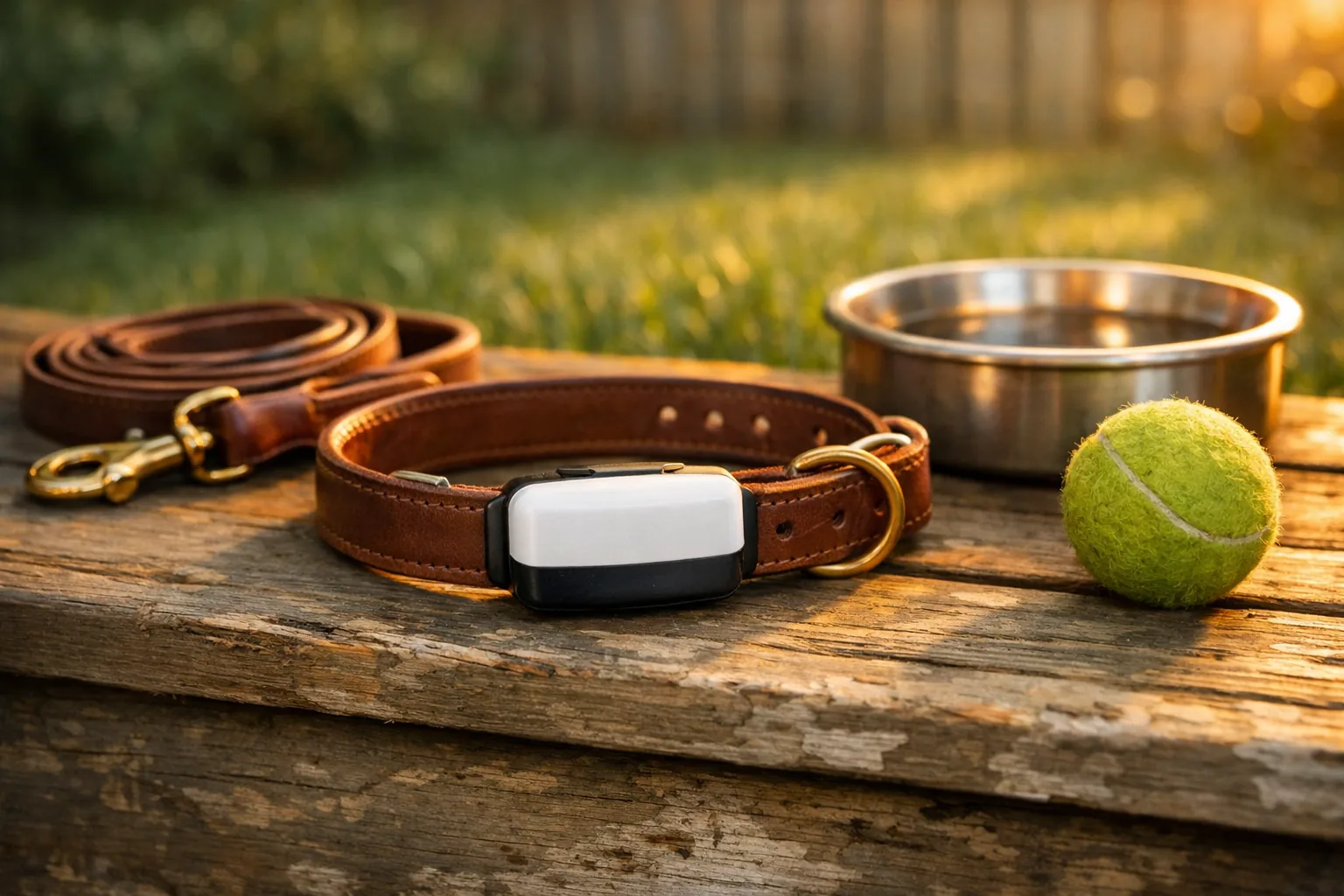
Start with the catch, because it is the thing that decides this purchase: with the Tractive XL, you do not really own the tracking. You own a collar clip, and you rent the service that makes it work. There is no Bluetooth fallback, so the day you cancel the subscription, the hardware becomes a paperweight. That single structural fact is behind most of the unhappy reviews, and it is the first thing any honest review has to put on the table.
If you make peace with that, the rest of the picture is genuinely strong. A GPS collar is one of those products you never think about until the moment you need it, when your dog clears a fence, bolts after a deer, or slips through a gate someone left cracked. In that moment, every second without a location feels like an hour. Tractive has spent years building for exactly that moment, and the XL, aimed at larger dogs, is the best-reviewed tracker in its own lineup.
This review covers who the XL is actually built for, where it quietly outperforms cheaper options, and the two structural downsides every buyer should understand before ordering. The smaller standard Tractive comes in as the alternative for owners whose dogs are too light for the XL, since the two share an app, a feature set, and the same subscription model.
The reviewed pick is the Tractive XL: near-real-time live GPS updates, about a month of battery per charge, and heart-rate and respiratory monitoring built in, all on a cellular network that works far beyond Bluetooth range.
The Verdict in One Paragraph
The Tractive XL is worth it if you own a large or escape-prone dog and you are comfortable paying a recurring subscription on top of the hardware. In exchange you get near-real-time live GPS once the dog leaves a safe zone, a battery owners repeatedly confirm lasts about a month, and the rare addition of heart-rate, respiratory-rate, activity, and sleep monitoring at this price. If your dog is small, the lighter standard Tractive matters more than raw range, and it is the better choice there. The subscription is the whole decision: understand it going in and the XL is a quiet lifesaver, miss it and you will feel misled.
The Tractive XL is the flagship of the current lineup, built for bigger dogs with a housing that clips onto any standard collar. It is on the heavier side, and a handful of owners do flag the weight on lean, narrow-necked breeds like collies and pointers. On labs, shepherds, huskies, and large mixed-breed rescues it rides without complaint, and the trade for that bulk is a battery that genuinely lasts about a month per charge, which owners confirm again and again, including on multi-week trips with no charger.
The core feature is live location tracking. When your dog leaves a virtual safe zone you set in the app, the XL flips into live mode and pushes near-constant updates over a global cellular network. For a dog that bolts, that update speed is the difference between finding them two blocks away and two miles away. The most common positive story in the reviews is a version of the same relief: the dog got out, the app showed exactly where, and the dog came home within minutes. Owners reach for the word “lifesaver” more than they do for almost anything at this price.
Beyond location, the XL is one of the few trackers that treats the collar as a health wearable. Onboard sensors follow heart rate, respiratory rate, activity, and sleep, and the app compares each dog against breed-based baselines. That becomes genuinely useful around senior dogs, post-surgery recovery, or any time you want a second opinion on whether your dog actually rested while you were at work. Add the bark alerts and the escape alert that fires the moment the dog crosses your fence line, and it behaves less like a tag and more like a small piece of home monitoring clipped to a collar.
Two cautions repeat across the negative reviews, and both deserve weight. The first is the subscription. The hardware is cheap on purpose, because the recurring plan is where Tractive makes its money, and several owners are caught off guard by auto-renewing charges and by the fact that the plan is non-refundable once billed. The second is battery longevity over years. Long-term owners note the internal cell starting to weaken after well over a year of daily use, which is simply the reality of sealed, waterproof lithium batteries. There is a money-back window on the hardware itself, so a test period exists, but anyone planning a multi-year horizon should expect to replace the device eventually.
Tractive XL
Tractive’s smaller model is worth a direct look because, depending on your dog, it may be the right pick even though it costs a little more than the XL. It is built for small and mid-size dogs, weighs roughly a third of the XL, and carries a much longer manufacturer warranty than the XL’s short money-back window. The app, the features, and the subscription plans are identical: same live tracking, same virtual fences, same heart-rate and respiratory monitoring. The trade is battery life, which runs around two weeks per charge rather than a full month.
What owners consistently call out is how naturally the smaller tracker sits on a terrier, a spaniel, a mini poodle, or a small senior. A few touches are quietly upgraded here too, including a brighter LED for nighttime recall and a louder locator ping for finding a dog in tall grass. It is also the version most multi-dog households end up buying once they have seen the app in action on a larger tester dog, which tracks with how often it shows up in the reviews. Skip it only if your dog is genuinely large and the longest battery is your top priority, in which case the XL is the better fit.
Tractive Standard
How the Subscription Actually Works
The XL makes sense in three specific situations. The first is large-breed owners with a fenced yard the dog has already tested at least once. Escape alerts are the single most-cited feature in the reviews, and the weight is a non-issue on a rottweiler, a shepherd, or a retriever. The second is rural and exurban owners whose dogs reach woods, fields, or open space. The cellular network works where Bluetooth tags are useless, and the long battery means you do not have to pull the device off overnight. The third is anyone tracking a senior dog, where the resting heart-rate and respiratory charts can flag early signs of decline once you have a couple of weeks of baseline.
The XL is the wrong product for three other buyers. It is overkill for indoor-only dogs that never leave a secure home. It is too heavy for small dogs, which is exactly why the standard model exists. And it is not for anyone who refuses a subscription. Unlike a Bluetooth tag, the XL has no offline fallback, so a canceled plan turns it into dead weight. If you want a one-time purchase with no recurring cost, look at Bluetooth-based pet tags instead, and accept the short range that comes with them.
Because so much of the frustration traces back to surprise billing, this part deserves its own block. The subscription is tied to the SIM inside the device, not to a specific dog or household. The cheaper rates come with longer commitments, the most flexible monthly plans cost more per month, and the higher tier is where the features most owners actually want live, such as unlimited location history, the vital-signs tracking, and family sharing. When someone quotes their monthly cost, they are usually describing that higher tier.
Two practical notes. First, a multi-year plan is the right call if you are confident in the product and your dog, because it cuts the effective monthly cost substantially. Second, the subscription is non-refundable once the billing cycle starts, so anyone on the fence should use the money-back window on the hardware to try the full experience before committing to a longer plan.
How to Choose a GPS Dog Tracker in 2026
Three decisions determine whether a tracker will actually work for you. Connectivity: cellular trackers work anywhere there is mobile coverage, which is the right answer for any dog that might travel more than a few hundred feet, while Bluetooth tags are range-limited and best as an indoor supplement. Weight versus battery: a heavy tracker on a small dog is uncomfortable, and a tiny one with a short battery becomes a charging chore, so match the device to the dog and accept the battery life that comes with it. Cost structure: a cellular tracker always carries a subscription, and what changes is only whether you pay monthly, annually, or on a multi-year term. Do the math for your expected ownership window before buying, because the hardware price is rarely the largest number.
A final note on vital signs. Heart-rate and respiratory monitoring on a pet wearable is still relatively new, and the use cases reach well past location. Owners of senior dogs, dogs with heart conditions, and dogs recovering from surgery find the data useful in the same way a person does with a smartwatch. If you are already paying for the plan, treating the device as both a tracker and a health wearable is the most efficient way to justify the recurring cost.
Is the Tractive XL worth it?
For large-breed owners whose dogs reach a yard, trail, or any open space, yes. The most repeated theme in the reviews is finding a lost dog within minutes. The subscription is the main reason to say no, and the pattern is clear: owners who understand the recurring cost going in stay satisfied, while owners who expected a one-time purchase do not.
How much does the Tractive subscription cost?
It depends on the plan and billing cycle. The lowest rate comes with the longest commitment, the higher tier with the full feature set costs more, and short monthly plans cost the most per month but offer flexibility. All plans are non-refundable once billed.
How long does the battery actually last on the XL?
Tractive advertises about a month, and long-term reviewers confirm it in practice, including multi-week trips without a charger. Heavy live-mode use, meaning dogs that escape often, drains it faster.
Is the Tractive XL waterproof?
Yes. Owners report it surviving lakes, oceans, creeks, and daily rain without trouble. Dogs that swim regularly are a recurring use case in the best reviews, and the sealed housing is a real upgrade over open tags that corrode quickly on water dogs.
Are there subscription-free GPS dog tracker alternatives?
Most subscription-free trackers rely on Bluetooth or short-range radio, so they only work within a few hundred feet of your phone. They will help you find a dog under the bed, not a dog that cleared a fence two hours ago. Cellular trackers like Tractive need a SIM and therefore a plan, which is structural rather than a pricing choice.
Tractive XL or the standard Tractive, which should I buy?
Pick the XL if your dog is large and battery life matters most. Pick the standard model if your dog is smaller, if you value the longer warranty, or if the lighter weight matters. The app, the subscription, and the core features are identical between them.