
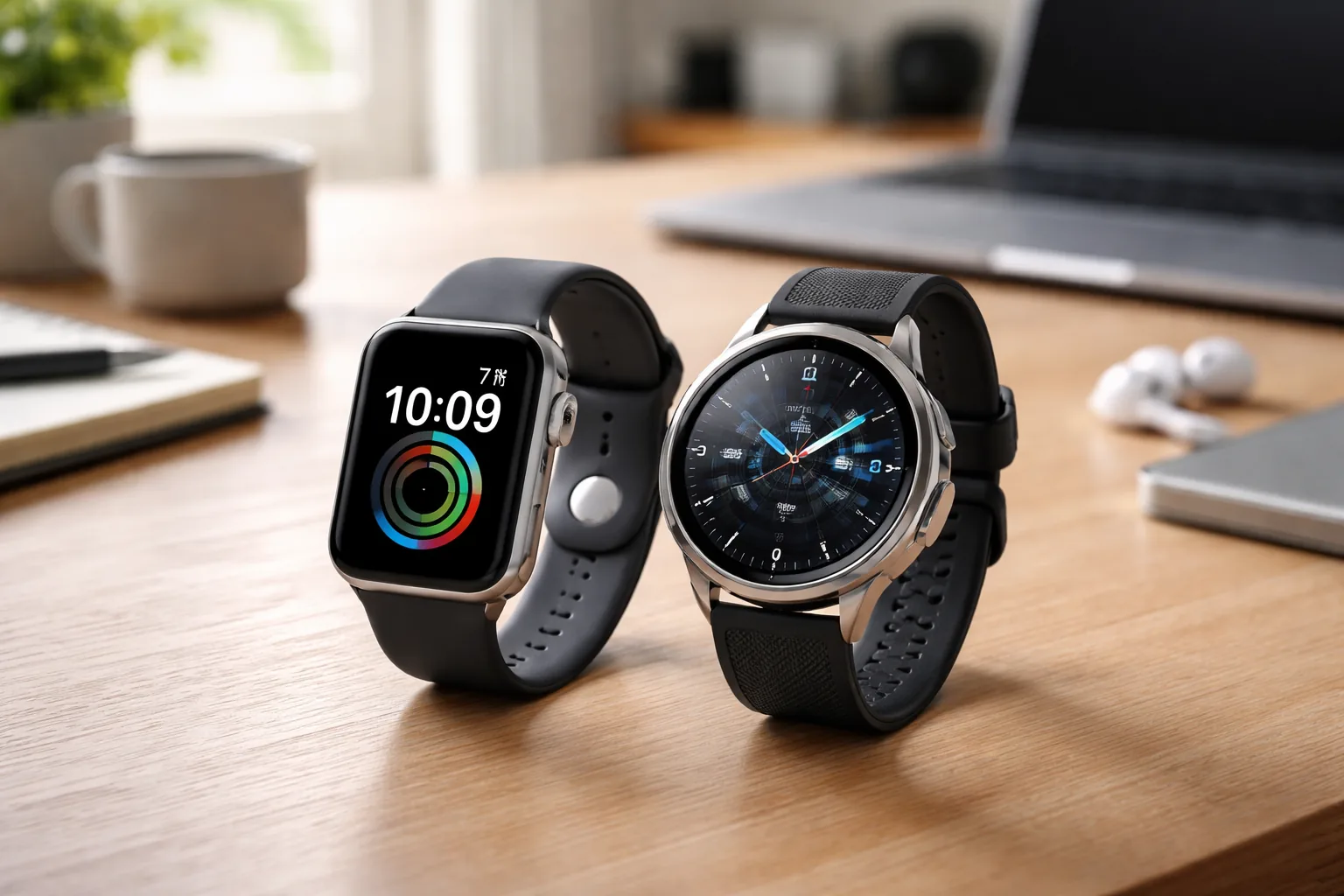
Here is the part most comparison articles bury at the bottom: the phone in your pocket has already made most of this decision for you. A smartwatch is not really a standalone gadget. It is an accessory to your phone, and the two big platforms guard that relationship closely. So before you weigh screens, sensors, or battery claims, the honest first question is simpler. What phone do you carry every day, and are you planning to keep it?
That single fact decides more than any spec sheet. The Apple Watch Series 10 only pairs with an iPhone. The Samsung Galaxy Watch 7 is built for Android and leans hardest into Samsung’s own phones. Cross-pairing is either impossible or stripped down to the point of being pointless. Once you accept that, the rest of the comparison becomes a much calmer conversation about price, comfort, and which extras you will actually use.
Both watches are mature, well-reviewed products with thousands of owners behind them, so neither is a risky buy. This is not a good-versus-bad matchup. It is a fit question, and the rest of this guide walks through the situations where each one clearly wins.
The Apple Watch Series 10 is the cleaner everyday experience for anyone inside Apple’s world. It is the most-reviewed watch in this comparison and holds the higher rating, so the trust signal is strong. The larger, brighter always-on screen is the standout improvement, and the health suite (ECG, sleep tracking, heart-rate alerts, Activity Rings) works without setup friction once it is paired to your iPhone.
Owners consistently call out the display quality, the comfortable fit, and how naturally it slots into an existing Apple setup. The main reservation is price. This is the expensive side of the matchup, and it only earns that premium if you will genuinely lean on the display, the health features, and the iPhone integration.
Skip this if: you carry an Android phone, or you only want step counts and notifications and would rather not pay flagship money for them.
Apple Watch Series 10 46mm
The Samsung Galaxy Watch 7 delivers the everyday smartwatch experience for a good deal less than the Apple Watch. It tracks fitness and sleep, surfaces Samsung’s wellness coaching like Energy Score, and pushes notifications and calls to your wrist with a bright, comfortable design owners rate highly.
The rating sits slightly below the Apple Watch, but it is backed by thousands of reviews and reads as a strong, stable product. The thing to know going in: several of its best features assume a Samsung Galaxy phone and the Samsung Health app, so the deeper you are in Samsung’s ecosystem, the more you get out of it.
Skip this if: you use an iPhone, or you want a watch that will follow you across whatever phone you buy next.
Samsung Galaxy Watch 7 40mm
So Which One Should You Buy?
Most people will already know their answer from the phone question alone. For the buyers stuck between the two, a few smaller details usually settle it.
Budget swing. If price is doing the deciding, Samsung wins outright. The gap between these two is wide enough to cover a year of accessories, extra bands, or a charging stand and still leave change. The Apple Watch only makes sense as the spend if you will use the features that justify it.
Display size and readability. If you struggle to read a small screen, or you want the most glanceable face during workouts, the Apple Watch Series 10 has the edge with its larger always-on display. Samsung’s screen is bright and sharp, but the Apple panel is the one that wins the “can I read this without squinting” test.
Switching plans. If you think you might jump platforms in the next couple of years, weigh that now. Neither watch travels with you to the other side. Buying a watch that locks you tighter into a phone ecosystem is fine if you are staying put, and a small trap if you are not.
Household match. If your family already runs on one platform, matching it removes friction. Shared features, easier setup, and family controls all lean toward picking the watch that matches the phones already in the house.
For most iPhone users, the answer is the Apple Watch Series 10. It has the higher rating, the larger review base, and the smoothest integration with the phone you already own. As long as you will actually use the display and the health features, the premium is easier to swallow.
For most Android and Samsung users, the Galaxy Watch 7 is the better buy. It saves real money while covering the smartwatch basics that matter day to day, and it gets stronger the deeper you are in Samsung’s ecosystem.
Strip away the brand noise and the rule is short: buy the watch that matches your phone, then let budget and screen size break any remaining tie.
Can I use an Apple Watch with an Android phone, or a Galaxy Watch with an iPhone?
No. The Apple Watch only pairs with an iPhone, and the Galaxy Watch is built for Android. This is the single biggest factor in the decision, so start there before comparing anything else.
Which one is the better value right now?
The Samsung Galaxy Watch 7. It costs meaningfully less than the Apple Watch while covering the core smartwatch experience, so for value-first shoppers on Android it is the clear pick.
Is the Apple Watch worth the higher price?
Only if you will use what you are paying for. The larger display, the full health suite, and tight iPhone integration justify the premium for committed Apple users. For light step-counting and notifications, it is overkill.
How often will I need to charge either watch?
Plan on charging both roughly every day with normal use, more often if you track sleep and run the always-on display. Neither is a multi-day endurance watch, so build a nightly or morning charging habit into your routine.
Which has better health and fitness tracking?
They are close. The Apple Watch bundles ECG, sleep stages, and heart-rate alerts into one tidy package, while Samsung counters with Energy Score and wellness coaching that works best on a Galaxy phone. Pick based on your phone, not the feature list.
Will buying either one lock me into a phone brand?
Effectively yes. Each watch ties you tighter to its platform, so if you expect to switch phones soon, factor that in before you buy. If you are staying on your current phone, that lock-in is a non-issue.