
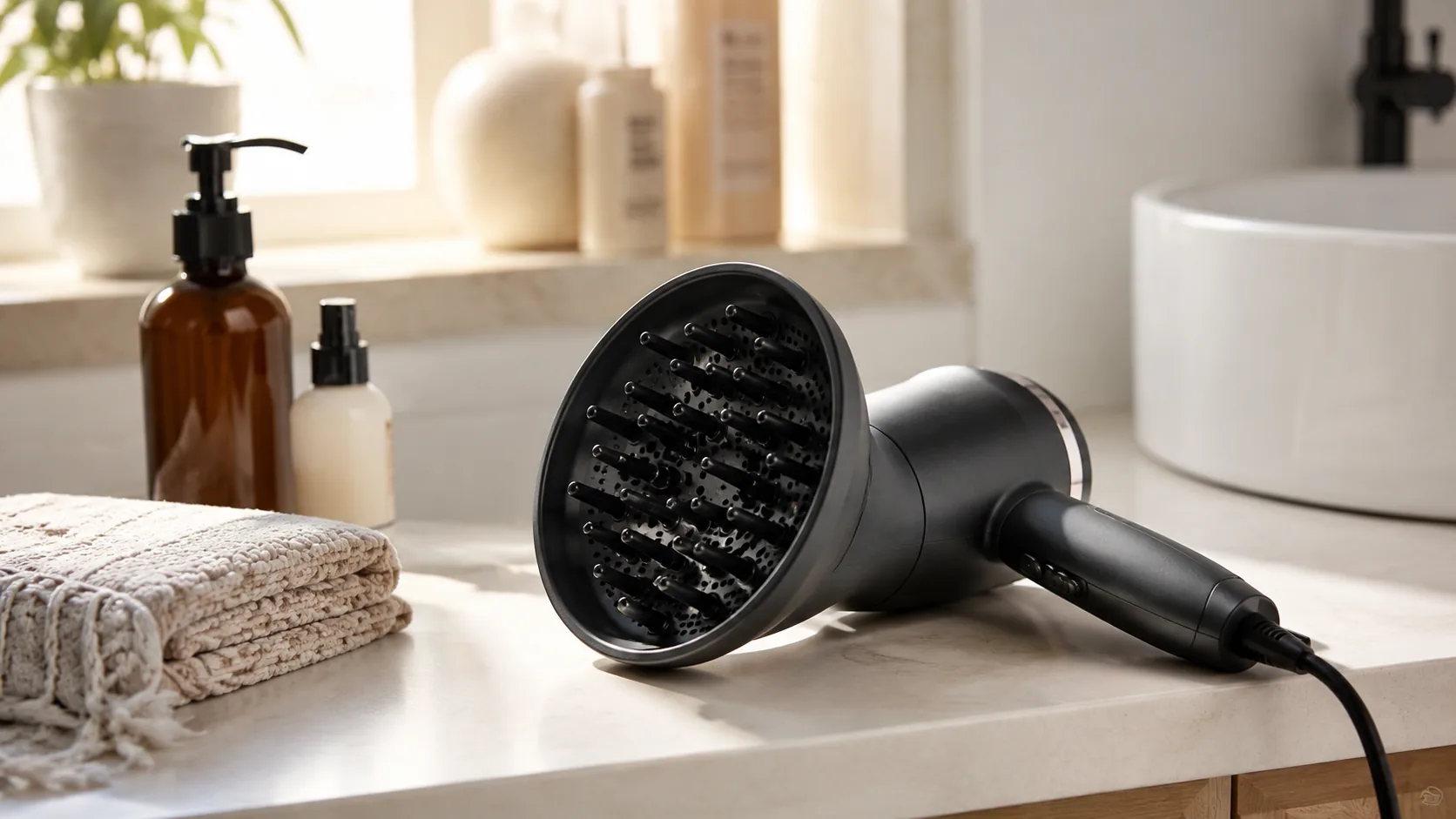
Curly hair punishes the wrong dryer. Aim a bare nozzle at a fresh curl pattern and you get frizz, a halo of broken strands, and a twenty-minute fight every wash day. The fix is not a more expensive machine. It is two specific things working together: a diffuser that spreads the air gently enough to keep the curl intact, and ionic heat that calms the static that turns definition into frizz.
Every pick below has both. What separates them is the diffuser shape, how long the motor will survive daily use, and small comforts like weight and noise. The most expensive option here is not the best one for curls, and the cheapest is not a trap. The right answer depends on your texture and how often you reach for the dryer.
Best overall for curls: the REVLON Infrared Ionic dryer with its diffuser. It dries fast, fights frizz with ionic and infrared heat, stays light in the hand, and is the pair the most people with curls have settled on.
Start with your curl type, not the price
Loose to medium curls that mostly need fast, low-frizz drying are well served by the REVLON, which is why it is the default here. Tighter, denser textures that need the air pushed deep into the curl do better with the Wavytalk and its longer diffuser fingers. If you dry your hair every single day, the longer-lasting motor in the Conair is the one that will not quit on you in a year. The slopehill is for anyone styling in a thin-walled apartment or late at night, and the budget pick is for testing the waters before committing.
The technique matters as much as the tool. Curls reward low heat and patience over a hot blast, and a cool shot at the end to set the shape. Keep that in mind and any of these will treat your hair better than a basic dryer does.
The REVLON is the one most people with curls should reach for first. It stacks three frizz-fighting tricks, ionic output, a tourmaline ceramic surface, and gentle infrared heat that warms the strand from within rather than scorching the outside, and the result is faster drying with less of the fuzz that high heat leaves behind. Owners across loose and tight textures alike report that wash day shrinks noticeably once they switch to it.
It is light, which matters more than it sounds when curly hair needs ten or fifteen minutes of hold time and your arm starts to complain. The diffuser and a concentrator both come in the box, and the heat and speed settings give you room to go gentle. The honest limits are a shortish cord and a diffuser with shallower fingers than a dedicated curl design, so the densest textures may want the next pick.
Skip this if your hair is very tightly coiled and thick, where a deeper diffuser pushes air where it needs to go.
REVLON Infrared Ionic
The Wavytalk was designed around curls rather than adapted for them, and the difference shows in the attachments. Its diffuser has deeper fingers that reach into thick, dense curls and lift them from the root, and it ships with a comb attachment that most dryers leave you to buy separately. For anyone with tight coils who usually picks out their hair while drying, that comb saves a step every time.
Power and ionic frizz control sit right alongside the REVLON, and the cord is generous enough to move around the mirror freely. The trade-off is a slightly lower owner rating and a shorter track record from a newer name, so the long-term motor reliability is less proven. For the texture it is built for, though, the deeper diffuser is the reason to pick it.
Wavytalk Curly Hair Dryer
The Conair is the durability pick, and the reason is its motor. Most budget dryers use the lighter, cheaper kind that runs hotter at the housing and tends to fade after a year or so of daily use. The Conair uses the sturdier salon-style motor that runs cooler, pushes steadier air, and keeps going for years. If you dry your own curls daily, or do a child’s hair every morning, that longevity is what you are paying the small premium for.
It brings the same ionic and tourmaline frizz control as the rest, with a diffuser sized for medium to long hair and a longer cord. It is a touch heavier than the featherweight picks, which is the cost of the better motor. People who dry hair as part of a routine, not an occasional treat, are the ones who get their money back here.
Conair InfinitiPRO
The slopehill earns its place on a single quality that the spec-focused listings undersell: it is noticeably quieter than the rest at a similar power level. If you style early while a partner sleeps, share thin apartment walls, or simply find dryers grating, that calm is worth a lot. It is not a gimmick at the cost of performance, the ionic output is strong and several owners single out shinier results.
It comes with a diffuser and a couple of concentrator nozzles, and the heat and speed range covers gentle curl drying. The build is more plastic than the salon pick, and the diffuser is a standard depth, so it suits fine to medium curls better than the densest coils. For quiet styling without giving up frizz control, it is the obvious choice.
slopehill Ionic Dryer
The ANNE BETTY is the entry point. It is the newest and cheapest here, yet it still brings the full kit: ionic ceramic heat, a diffuser, and concentrator nozzles, with simple heat and speed settings and a cool shot. For a student, an occasional styler, a travel backup, or anyone testing whether a diffuser-and-ionic setup is worth it before spending more, it covers the basics honestly.
The caveats are the ones you would expect at this price. The feedback pool is small, so its long-term reliability is less certain, and the lighter-duty motor is better suited to a few sessions a week than daily heavy use. As a first curl dryer, it does the job; as a daily workhorse for years, step up to one of the picks above.
ANNE BETTY Ionic Dryer
The trade-off worth understanding
For curly hair the real decision is not budget against premium. It is matching the diffuser and the motor to your texture and your routine. A loose curl drying a few times a week is happiest with the light, fast, frizz-calming REVLON. A dense coil that needs air driven deep wants the Wavytalk’s longer fingers. Someone drying daily should weigh durability above all and lean toward the Conair, whose better motor simply outlasts the cheaper ones.
Power and frizz technology are close enough across all five that they rarely decide anything. What you actually feel day to day is the diffuser shape, the weight in your hand after ten minutes, and whether the motor is still strong a year from now. Choose on those.
How to dry curls without the frizz
Whichever dryer you pick, the method protects the result. Work on low to medium heat with the diffuser cupping the curls rather than blasting them, and resist the urge to crank it up to save time, since high heat is what roughens the cuticle and invites frizz. Dry to nearly done rather than bone dry, then hit the cool shot to lock the shape. Clean the back vent now and then, because a clogged filter is what burns out a motor early on any of these.
What is the single most important feature for curly hair?
A diffuser. It spreads the airflow over a wide area so the curl keeps its shape instead of being blown apart into frizz. Ionic heat is the close second, since it calms the static that turns definition fuzzy. Every pick here has both.
Do I need an expensive dryer for curly hair?
No. The mid-range Conair gives you a long-lasting motor and the same frizz control as far pricier flagships. The premium machines mainly buy lighter weight and longer cords for stylists. For home drying, the picks here cover what curls actually need.
How long should a curly-hair dryer last?
It depends on the motor. The lighter motors in most budget dryers tend to fade after a year or so of daily use, while the sturdier salon-style motor in the Conair runs for years. Clean the rear vent regularly either way, since a clogged filter shortens any motor’s life.
What heat setting is best for curls?
Low to medium for most of the drying, with higher heat saved only for stubborn roots. Curly hair is more porous and burns faster than straight hair, so gentler heat over a little more time protects it. Finish with the cool shot to set the curl.
Should I dry curls all the way?
Stop a little short of fully dry. Taking curls to bone dry tends to invite frizz, so leave them just slightly damp, then set the shape with cool air. Diffusing on low heat rather than a hot blast also keeps the curl pattern intact.