
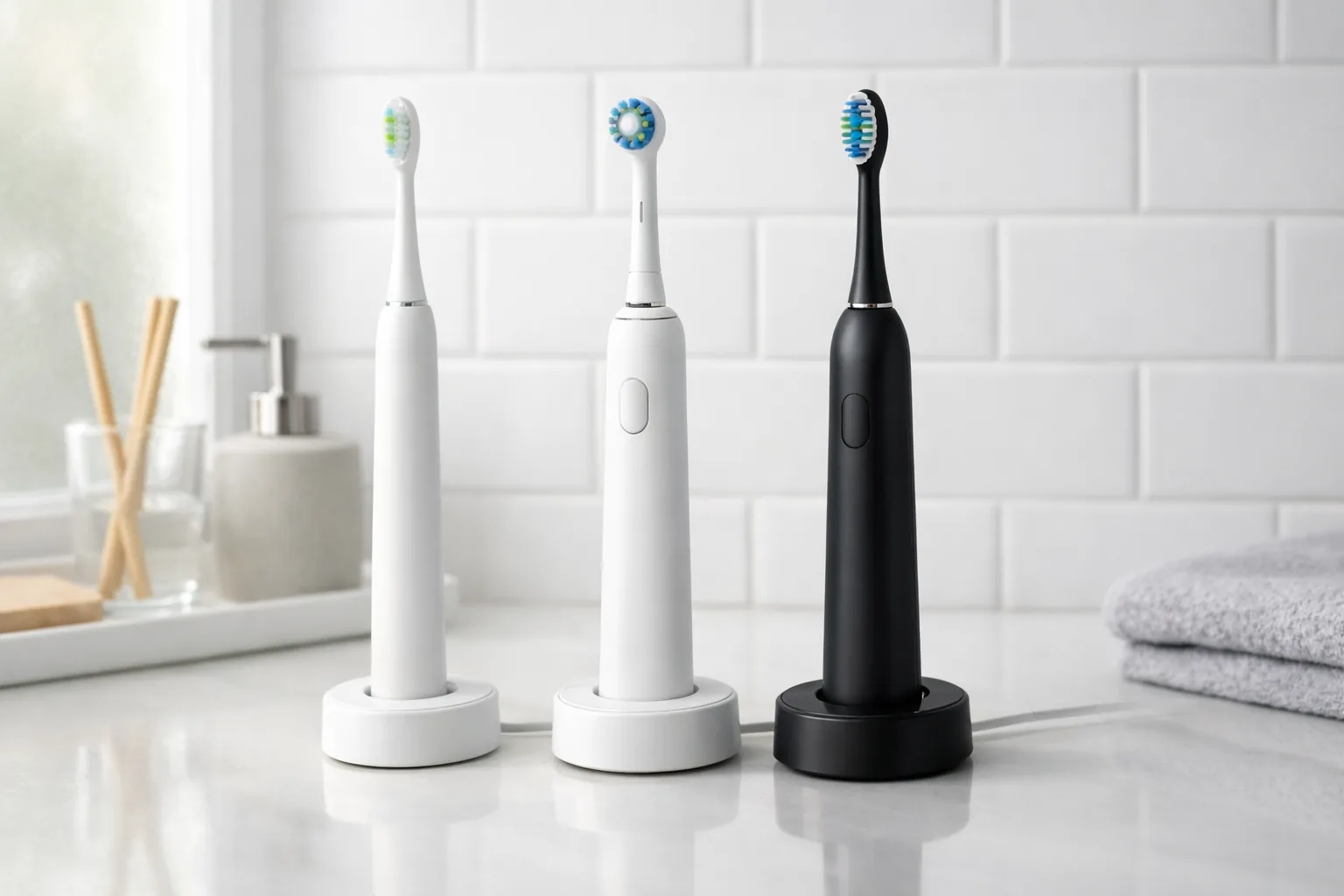
The premium electric toothbrushes get the marketing budget, the app integration, and the breathless launch events. Almost none of that reaches your gumline. Strip a toothbrush back to what actually cleans teeth, a fast motor, a pressure sensor so you don't scrub your gums raw, a timer to keep you honest for two minutes, and a brush head that fits your mouth, and you can have all of it for under $50. The sub-$50 shelf is where the real value lives, and the verdict from years of buyers is blunt: you do not need to spend more.
The five below cover every cleaning style, sonic vibration, oscillating rotation, and ultrasonic, so the right answer depends on your mouth, not your budget. One of them is built for crowded teeth, one for travel, one for a first-timer nervous about electric brushing, and two are simply a lot of toothbrush for very little money. Here's how to tell which is yours.
- Products analyzed
- 5
- Average rating
- 4.5
- Price range
- budget, all under $50
- Top rated
- Aquasonic Black Series (4.6)
- Most reviewed
- Aquasonic Black Series
Our Top Pick
The Aquasonic Black Series is the easy default: it's the bestselling ultrasonic toothbrush on Amazon, runs a fast 40,000-VPM motor, includes a wireless charging base and a stack of DuPont brush heads, and carries the ADA Seal of Acceptance. You get more in the box than most name brands hand you, for a fraction of the price.
Top 5 at a Glance
| Product | Check |
|---|---|
| Aquasonic Black Series Ultra Whitening Toothbrush – ADA Accepted Electric Toothbrush- 8 Brush Heads & Travel Case – 40,000 VPM Electric Motor & Wireless Charging - 4 Modes w Smart Timer | (opens on Amazon) |
| Oral-B Pro 1000 Rechargeable Electric Toothbrush, Black | (opens on Amazon) |
| Philips Sonicare 4100 Series Electric Toothbrush - Sonic Toothbrush with Advanced Sonic Technology, Pressure Sensor, Two Intensity Settings, Smartimer & Quadpacer, Deep Pink, Model HX3681/26 | (opens on Amazon) |
| Bitvae ADA Accepted Electric Toothbrush, Travel Toothbrush Rechargeable for Adults and Kids, 60-Day Battery, 5 Modes, 8 Heads, Portable Travel Case & Holder, Shadow Black | (opens on Amazon) |
| Philips Sonicare 1100 Series Electric Toothbrush - Sonic Toothbrush with Advanced Sonic Technology, EasyStart, Smartimer & Quadpacer, White, Model HX3641/02 | (opens on Amazon) |
Which One Fits You
- Crowded or overlapping teeth: the Oral-B Pro 1000's small round head reaches where flat heads miss.
- Switching from a manual brush for the first time: the Sonicare 4100 eases you in gently.
- You travel constantly and hate packing chargers: the Bitvae D2 runs about two months per charge.
- You want everything in the box and don't want to think about it: the Aquasonic Black Series.
- You want the brand-name experience for the least money: the Sonicare 1100.
The Reviews
Aquasonic Black Series Ultra Whitening Toothbrush – ADA Accepted Electric Toothbrush- 8 Brush Heads & Travel Case – 40,000 VPM Electric Motor & Wireless Charging - 4 Modes w Smart Timer
The Aquasonic is the bestselling ultrasonic toothbrush on Amazon, and it earns that by undercutting name brands while out-equipping them. The motor runs 40,000 vibrations a minute, matching brushes that cost two or three times more, and it charges on a proper wireless base rather than the plug-in connector you'd expect at this price. No fishing for a USB cable in the morning.
It ships with a generous set of DuPont brush heads, enough to last a couple of years before you buy more, which quietly saves you the steady drip of replacement costs that name brands rely on. Four modes cover daily cleaning, whitening, gum care, and sensitive, a timer pulses every 30 seconds to pace your quadrants, and it's fully waterproof. The ADA Seal of Acceptance backs up the plaque-and-gingivitis claims with independent review. People who switched from pricier sonic brands keep noting the clean is comparable while the box holds far more.
Skip this if you want a small round rotating head for tight, crowded teeth, since this is an ultrasonic brush with a standard head. For most mouths, it's the smartest all-rounder here.
Pros
- Bestselling ultrasonic brush, long track record
- Wireless charging base included
- Years of brush heads in the box
- 40,000-VPM motor, four modes
- ADA Accepted for plaque and gingivitis
- Waterproof, longest battery life here
Cons
- Mode and power buttons sit close, easy to bump
- Charger wants a direct wall outlet, not an extension cord
Oral-B Pro 1000 Rechargeable Electric Toothbrush, Black
The Pro 1000 is the entry to Oral-B's rechargeable line and the budget electric brush dentists have recommended for years. Its mechanism is fundamentally different from the sonic and ultrasonic brushes here: a small, round CrossAction head that oscillates, rotates, and pulsates at once, working one tooth at a time the way a hygienist's tool does. That round, angled head is the whole point. It wraps individual teeth and slips into the interdental gaps that flat rectangular heads, manual or electric, routinely skip.
A pressure sensor cuts the pulsing when you press too hard, which directly guards against the over-brushing that causes so much gum recession. Three modes cover daily, gum care, and sensitive cleaning, and an in-handle timer paces you. People with crowded or overlapping teeth consistently rate it above sonic options for exactly this reason, and Oral-B heads are the easiest to find on a shelf at any drugstore when you run low.
Skip this if you share a bathroom with light sleepers or want long battery life, because it's the buzziest brush here and needs charging most often.
Pros
- Round head reaches crowded, tight teeth
- 3D oscillating-rotating-pulsating motion
- Pressure sensor stops over-brushing
- Most widely recommended by dentists
- Three modes
- Replacement heads stocked everywhere
Cons
- Louder and buzzier than sonic brushes
- Shortest battery life on this list
Philips Sonicare 4100 Series Electric Toothbrush - Sonic Toothbrush with Advanced Sonic Technology, Pressure Sensor, Two Intensity Settings, Smartimer & Quadpacer, Deep Pink, Model HX3681/26
The Sonicare 4100 sits at the top of this list's price range and earns it with features Philips usually saves for pricier models. The C2 Optimal Plaque head, a haptic pressure sensor that pulses the handle when you push too hard, and a replacement reminder that tracks your brushing all show up here at an entry price. Its sonic technology drives fluid between teeth and along the gumline rather than scrubbing mechanically, reaching spots bristles alone can't.
What makes it the standout for newcomers is EasyStart, which ramps the power up gradually over the first couple of weeks so the jump from a manual brush feels comfortable instead of alarming. Battery life runs a solid two weeks, the warranty is among the longest in the category, and it's quieter than any rotating brush here, which matters in a shared or early-morning bathroom. Regular dental visitors report hygienists noticing the difference.
Skip this if you're on a tight budget and don't need the pressure sensor or replacement reminder, since the cheaper Sonicare 1100 gives you the same core sonic clean for less.
Pros
- Gentle EasyStart ramp for new users
- Haptic pressure sensor in the handle
- Quietest brush here
- Two-week battery life
- Long manufacturer warranty
- Replacement-head reminder
Cons
- Ships with USB cable but no wall plug
- A few report charging issues within a year
Bitvae ADA Accepted Electric Toothbrush, Travel Toothbrush Rechargeable for Adults and Kids, 60-Day Battery, 5 Modes, 8 Heads, Portable Travel Case & Holder, Shadow Black
The Bitvae D2 is the travel specialist and arguably the most brush-per-dollar on the list. It carries the ADA Seal of Acceptance, the most meaningful credential in the category, at a price where ADA-accepted brushes usually start higher. The slim handle is built to pack, with a 2-in-1 holder that doubles as a brush-head cover so you don't need a separate case, and a battery that runs roughly two months on a charge, enough to cover a long trip without bringing the charger at all.
It includes a couple of years' worth of brush heads, firm in the core for cleaning and softer at the edges for gums, and offers five modes with a paced two-minute timer. It's waterproof and shower-safe. Households report buying several and converting friends, the kind of word-of-mouth that signals real satisfaction rather than novelty.
Skip this if you want premium build feel, since the lighter handle, uncapped charging port, and proprietary (non-USB-C) charger are the trade-offs for the slim, cheap design. For travel and value, those are easy to live with.
Pros
- ADA Accepted at a low price
- About two months of battery per charge
- Slim design with built-in head cover
- Years of brush heads included
- Five modes with paced timer
- Waterproof
Cons
- Charging port has no protective cap
- Proprietary charger, not USB-C
Philips Sonicare 1100 Series Electric Toothbrush - Sonic Toothbrush with Advanced Sonic Technology, EasyStart, Smartimer & Quadpacer, White, Model HX3641/02
The Sonicare 1100 is the most straightforward call here: a genuine Philips Sonicare for the least money. If you want the brand and the core sonic-clean experience without paying up, this is the direct answer. The C1 Simply Clean head is softer and less aggressive than the 4100's, and the single-speed motor gives up some power, but you keep the things that matter most: real Sonicare technology, the EasyStart ramp, and the timer-and-quadrant pacing.
Battery life matches the pricier 4100 at two weeks, which tells you the underlying architecture is shared across the line. It charges on a compact USB stand and takes every Sonicare replacement head, including widely available third-party heads that cost far less than official packs. Longtime Sonicare owners report it performs comparably to older, much pricier models. It's the right pick for students, a lightweight travel backup, anyone on a strict budget, or a teenager's first electric brush you won't mind if it gets lost.
Skip this if you want intensity settings or a pressure sensor, since this is single-speed and bare-bones by design. Step up to the 4100 for those.
Pros
- Cheapest way into genuine Sonicare
- Two-week battery, same as the 4100
- EasyStart and timer pacing included
- Takes all Sonicare heads, including cheap third-party
- Slim, light, great travel backup
Cons
- Single speed, no pressure sensor
- USB cable but no wall plug in the box
How to Choose an Electric Toothbrush Under $50
Rotating versus sonic is the big decision. They clean differently, and the wrong type for your mouth leaves performance on the table. Rotating brushes like the Oral-B Pro 1000 use a small round head that works tooth by tooth and excels at crowded or overlapping teeth. Sonic and ultrasonic brushes like the Sonicare pair and the Aquasonic use high-frequency vibration to drive fluid across a wider area with a gentler feel. If a dentist has ever mentioned crowding or tight contacts, lean Oral-B. For most other mouths, sonic cleans just as thoroughly and feels kinder.
Know what the ADA Seal means. Two picks here, the Aquasonic and the Bitvae D2, carry the ADA Seal of Acceptance. It isn't automatic. A brand has to submit clinical evidence that the brush removes plaque and helps prevent gingivitis, then pass independent review. It's the clearest third-party proof of efficacy, and worth weighting if you've been flagged for gum risk.
Battery life decides convenience. The range here is wide. The Bitvae runs about two months, the Aquasonic about four weeks, both Sonicares two weeks, and the Oral-B about a week to ten days. For a brush that lives on the bathroom counter, even a week is fine. For travel, the Bitvae or a Sonicare spares you packing a charger.
Factor in replacement-head cost. Heads should be swapped roughly every three months, so four a year. The Aquasonic and Bitvae include years of heads up front, which delays that cost a long time. Oral-B heads are easy to buy anywhere but add up, and Sonicare brushes accept cheap third-party heads that cut the long-run cost significantly.
Is an electric toothbrush under $50 actually effective?
Yes. The picks here clean as well in everyday use as far pricier models, and buyer satisfaction shows no meaningful gap. The Oral-B Pro 1000 is the model many dentists name as a first electric brush, and the Sonicare 4100 matches the plaque-removal claims of Philips' costlier models.
What is the difference between sonic and rotating electric toothbrushes?
Rotating brushes like the Oral-B Pro 1000 use a small round head that oscillates and pulsates to clean one tooth at a time. Sonic brushes like the Sonicare 1100 and 4100 use high-frequency vibration to push cleaning fluid between teeth and along the gumline across a wider area. Rotating tends to win on crowded teeth, sonic feels gentler and covers more per stroke.
Is the Oral-B Pro 1000 or Philips Sonicare 4100 better?
Both are excellent for different mouths. The Oral-B Pro 1000's rotating head excels at crowded, hard-to-reach teeth and is a dentist favorite. The Sonicare 4100 is gentler and quieter, with a haptic pressure sensor and a two-week battery. If a dentist has flagged crowding or tight-spot plaque, go Oral-B. For gentleness and battery life, the 4100.
How often do I need to replace electric toothbrush heads?
Every three months, or sooner if the bristles fray. At four a year, the Aquasonic and Bitvae D2 both include enough heads to cover two-plus years up front. Sonicare and Oral-B heads can be topped up with cheaper third-party options on Amazon.
Does the Philips Sonicare 1100 come with a wall charger?
No. It ships with a USB charging cable but no wall plug, so you supply your own. The same goes for the Sonicare 4100. The Aquasonic does include a wireless charging base with a plug, which is part of why it's the easy in-the-box recommendation.
What does ADA Accepted mean for a toothbrush?
It means the American Dental Association reviewed clinical evidence that the brush is safe and effective for removing plaque and preventing gingivitis. It's not automatic and requires submission plus independent evaluation. Two brushes here carry it: the Aquasonic Black Series and the Bitvae D2.
As an Amazon Associate I earn from qualifying purchases. Prices and availability change frequently — use the Amazon button to check current pricing.