
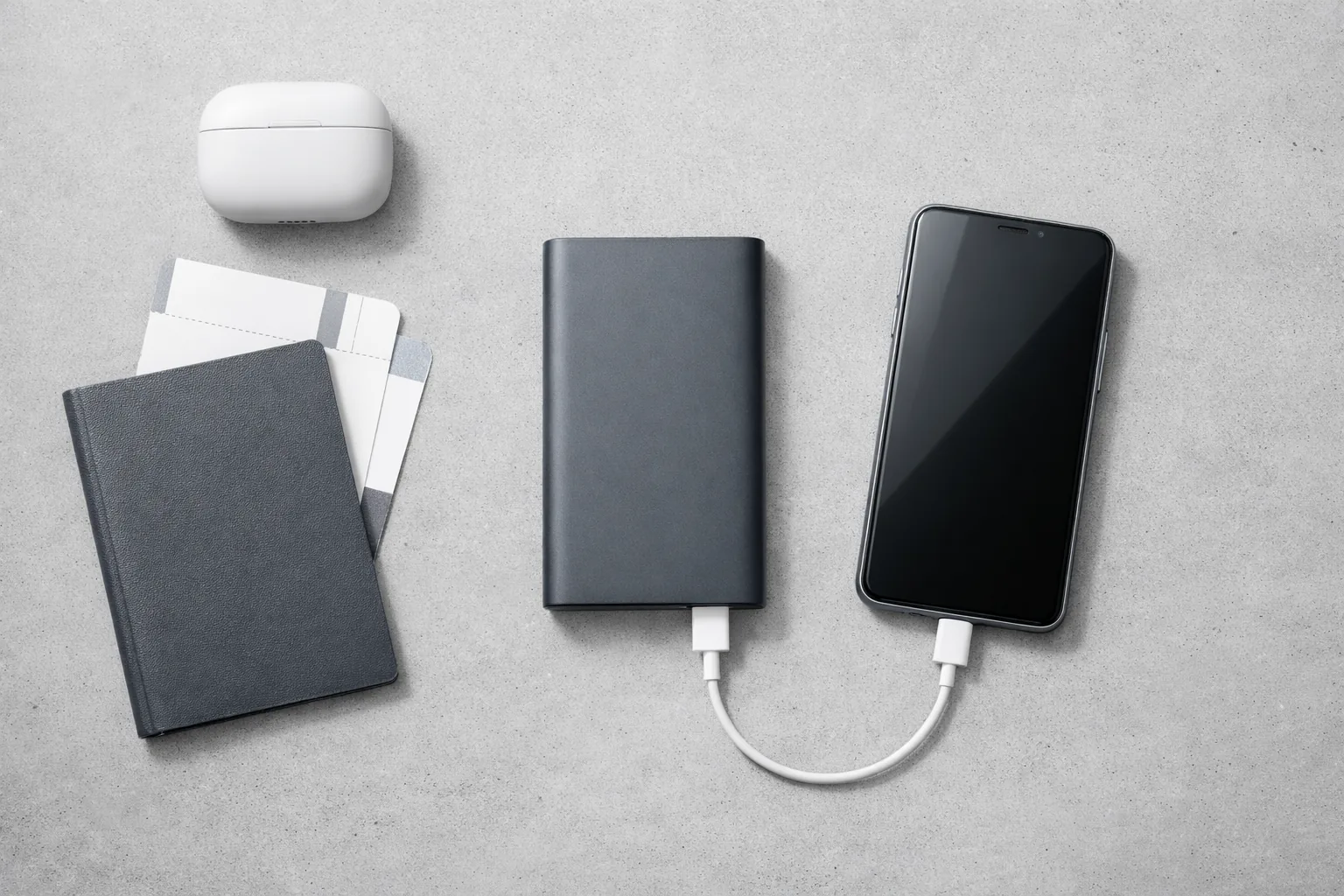
The power bank you end up regretting is almost always the one you bought for its biggest number. Either it's a slim 10,000mAh that taps out by mid-afternoon on a travel day, or it's a 50,000mAh brick so heavy you quietly stop carrying it within a week. Capacity is the easy spec to compare, and the wrong one to lead with.
A better starting question is how you'll carry it. A pocket-sized bank you always have beats a giant one you leave at home, and a travel brick that powers three devices for days beats a slim one you have to top up by lunch. One more thing decides your travel options before anything else. The TSA caps carry-on batteries at 100Wh, roughly 27,000mAh, and several picks here sit above that line. More on that below.
Five Picks at a Glance
| Product | Check |
|---|---|
| INIU 45W Fast Charging Portable Charger, 40% Smaller 10000mAh with Detachable Cable, Flight-Safe Travel Power Bank, USB C External Phone Battery Pack for iPhone 17 16 Pro iPad Samsung S26 Google etc | (opens on Amazon) |
| Anker Power Bank, 20,000mAh Travel Essential Portable Charger with Built-in USB-C Cable, 3-Port 87W Max Fast Charging Battery Pack, for MacBook, iPhone 16/15 Series, Samsung, Switch, and More | (opens on Amazon) |
| OHOVIV Portable Charger Power Bank 50000mAh Battery Pack, 22.5W Fast Charging PowerBank with Built in Cables,Travel Essential USB-C Portable Phone Charger for iPhone Samsung Pixel Android iPad | (opens on Amazon) |
| Portable Charger 50000mAh Power Bank,Portable Phone Charger with 2 Built in Cables,22.5W Fast Charging Travel Essentials Battery Pack for iPhone/iPad/MacBook/Android/Samsung Galaxy,Carbon Black | (opens on Amazon) |
| Portable Charger,50000mAh Power Bank Built-in Cable, 22.5W PD USB C In & Out Fast Charging, External Battery Pack with 6 Output & 2 Input, Travel Camping Essential for iPhone 17/16/15/14/13/12(Onyx) | (opens on Amazon) |
Pick by how you'll carry it
- Always in a pocket or bag, every day. Slim and light wins, and the INIU is built for exactly this.
- You want it to last for years and trust the brand. The Anker is the buy-once option with the best build.
- Long trips, or charging several devices at once. A high-capacity travel bank, though check the TSA limit first.
- You hate hunting for the right cable. A model with cables built in solves your actual daily annoyance.
- Flying soon. Anything above roughly 27,000mAh needs to ride in your carry-on and may need airline sign-off. Verify before you pack.
Reviews
INIU 45W Fast Charging Portable Charger, 40% Smaller 10000mAh with Detachable Cable, Flight-Safe Travel Power Bank, USB C External Phone Battery Pack for iPhone 17 16 Pro iPad Samsung S26 Google etc
The INIU 45W is the power bank you'll actually keep on you, which is most of the battle. It's the most-bought charger here for a reason. It's slim enough to share a pocket with your phone instead of weighing down a bag, so it's there when you need a top-up rather than sitting on a shelf at home.
The 45W USB-C output keeps pace with the fast charging on current iPhones and Android flagships, so a quick coffee-break charge actually moves the needle. An attached clip lets you hang it off a bag strap. It's the obvious pick for daily carry, with the volume of happy buyers to back that up.
Skip this if you need to power a tablet and a phone across a multi-day trip. Its single port and slim capacity aren't built for that.
Pros
- Slim and light enough for genuine daily pocket carry
- Fast USB-C output that matches modern phones
- An attached clip for hanging off a bag
- The most-bought, most-validated pick here
Cons
- A single port, so no charging two devices at once
- Daily-carry capacity, not a travel reserve
Anker Power Bank, 20,000mAh Travel Essential Portable Charger with Built-in USB-C Cable, 3-Port 87W Max Fast Charging Battery Pack, for MacBook, iPhone 16/15 Series, Samsung, Switch, and More
The Anker 20,000mAh is the one to get if you'd rather pay more now and not think about it again. Anker effectively set the standard for trustworthy charging gear, and it shows in the details: a solid housing, tight port fit, and charging circuitry that tunes output to each device.
The capacity covers several full phone charges, and dual ports, USB-A and USB-C, let you charge two things at once. It's the priciest pick here and larger than a slim daily-carry bank, but for someone who travels regularly or just wants the dependable option, the premium buys real durability rather than features you'll never touch.
Pros
- The best build quality on this list
- Dual-port charging for two devices at once
- Smart per-device output tuning
- Several full phone charges per fill
Cons
- The most expensive pick here
- Bigger than slim daily-carry options
OHOVIV Portable Charger Power Bank 50000mAh Battery Pack, 22.5W Fast Charging PowerBank with Built in Cables,Travel Essential USB-C Portable Phone Charger for iPhone Samsung Pixel Android iPad
When the point is to go as long as possible between outlets, this 50,000mAh bank delivers the most reserve here. On a long travel day it's the difference between rationing your phone and not thinking about it, and it has enough left over to keep a tablet alive too.
Its fast charging handles most current phones at near-full speed, and three ports mean a couple traveling together, or one person juggling phone, earbuds, and a tablet, can all charge at once. The catch is the same as any bank this size. Confirm the Wh rating on the box against your airline's limit before you fly with it.
Skip this if you want something for your pocket. This is a stay-in-the-bag travel reserve, not an everyday carry.
Pros
- The largest reserve on this list
- Three ports for charging several devices at once
- Fast charging for current phones
- Strong value for the sheer capacity
Cons
- Heavier and bulkier than daily-carry models
- Above the easy carry-on limit, so check airline rules
Portable Charger 50000mAh Power Bank,Portable Phone Charger with 2 Built in Cables,22.5W Fast Charging Travel Essentials Battery Pack for iPhone/iPad/MacBook/Android/Samsung Galaxy,Carbon Black
Similar in size and capacity to the travel pick above, this 50,000mAh bank distinguishes itself on small practical touches: a more precise charge readout than the usual four-dot indicator, and a build that buyers tend to note favorably for the price.
It's solidly reviewed without being a marquee name. If your priority is a big reserve, you don't need built-in cables, and brand recognition isn't the deciding factor, it's the no-nonsense high-capacity choice. As with any bank this size, mind the airline limit before flying.
Pros
- A large reserve for long trips
- A more precise charge-level readout
- Multiple output ports
- Competitive for the capacity
Cons
- No built-in cables, so bring your own
- Too heavy for comfortable daily carry
Portable Charger,50000mAh Power Bank Built-in Cable, 22.5W PD USB C In & Out Fast Charging, External Battery Pack with 6 Output & 2 Input, Travel Camping Essential for iPhone 17/16/15/14/13/12(Onyx)
The most common power-bank annoyance is needing a separate cable, and this 50,000mAh model removes it. Lightning, USB-C, and Micro-USB cables fold right out of the body. Pull it out, unfold, charge. No digging through a bag for the right cord.
It's well-liked among buyers who specifically want that convenience, and its fast charging handles current phones fine. Two caveats come with the design. Built-in cables can't be swapped if one wears out, and they're short, so charging while the bank rides in a bag is awkward. If integrated cables are the feature you want, though, it's the pick.
Pros
- Lightning, USB-C, and Micro-USB cables built in
- No separate cables to carry or lose
- A large reserve capacity
- Fast charging for current phones
Cons
- Built-in cables can't be replaced if damaged
- The cables are short for in-bag charging
The size-versus-carry trade-off
Every choice here comes down to one tension. The bigger the reserve, the less likely you are to carry it. A 50,000mAh bank powers your devices for days, but it's heavy enough that plenty of people leave it home except for trips. A slim 10,000mAh bank carries so easily it's always with you, but it taps out on a heavy day.
The way out is to stop looking for one bank to do everything. A slim daily-carry model handles the top-ups that fill ordinary days, and a high-capacity bank comes out for travel and emergencies. If you're forcing a single choice, weight it toward how you spend most days, and remember that the largest banks bring an airline complication the smaller ones don't.
How to Choose a Portable Charger
Size the capacity to the job, not the spec sheet. Real output runs well below the printed mAh because of conversion losses. As a rough guide, 10,000mAh covers a couple of phone charges, 20,000mAh four to five, and 50,000mAh keeps multiple devices going for days. Match that to daily top-ups, a weekend, or a long haul.
Fast charging needs both sides to cooperate. A high-wattage bank only charges fast if your phone supports a compatible standard. Current iPhones and most Android flagships will use a 45W output near their top speed. Below about 18W, charging is noticeably slow for modern phones.
Know the airline rule before you buy for travel. Carry-on lithium batteries are capped around 100Wh, roughly 27,000mAh. Banks above that must go in carry-on, not checked, and some need airline approval. The Wh figure is printed on the unit, so check it against your airline before you fly.
Brand matters most for gear you rely on daily. Established names tend to have better components, safety certification, and support. For a charger you depend on while traveling, that premium is reasonable. For occasional backup use, a well-reviewed value brand is fine.
What's the best portable charger for an iPhone?
For everyday carry, the slim INIU 45W charges an iPhone near its top speed and fits in a pocket. If you want a buy-once option with the best build and dual ports, the Anker 20,000mAh is the premium choice and covers several full charges per fill.
How many times can a 20,000mAh bank charge a phone?
Roughly four to five full charges for a typical phone. Real output is well under the rated figure because of heat and conversion losses, so treat printed capacity as a ceiling rather than a promise. A 10,000mAh bank lands around two charges.
Can I bring a power bank on a plane?
Yes, in carry-on only, never checked. The limit is about 100Wh, roughly 27,000mAh. Smaller banks are clearly fine. The 50,000mAh picks here sit above the easy limit, so check their printed Wh against your airline's policy first.
Does fast charging hurt my phone's battery?
The phone, not the charger, controls how fast it accepts power, and it manages that to protect the battery. Fast charging runs a little warmer, which marginally affects long-term wear, but the practical impact over a few years of ownership is negligible.
What's the real difference between 10,000 and 50,000mAh?
About five times the reserve, but three to four times the weight and bulk. A 10,000mAh bank is a light daily top-up. A 50,000mAh bank powers several devices for days and is better treated as a travel or emergency reserve.
As an Amazon Associate I earn from qualifying purchases. Prices and availability change frequently — use the Amazon button to check current pricing.