
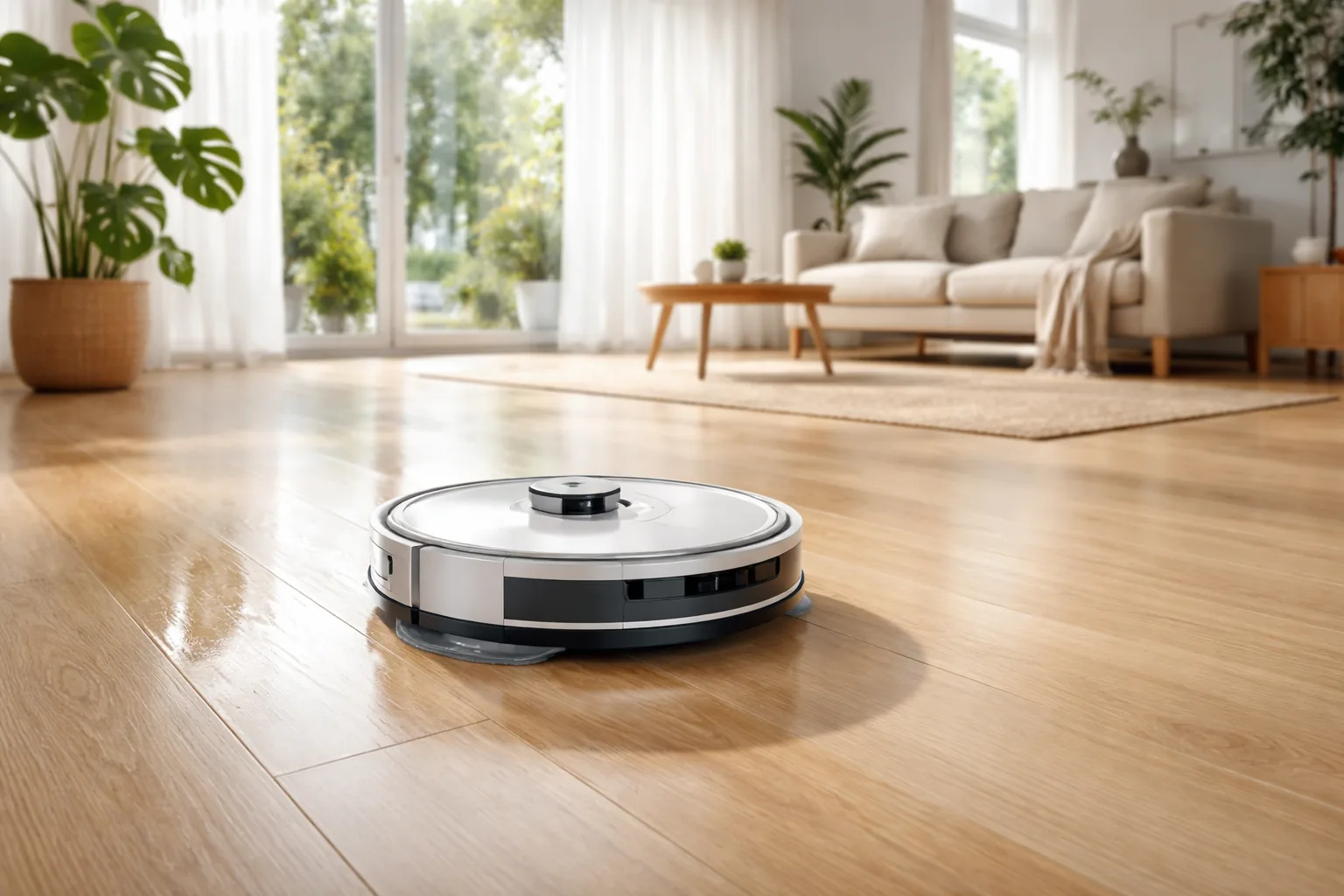
Robot vacuums got good a while ago. The combos that also mop are where the models still differ widely, and the difference hides in the one spec almost nobody checks before buying: how the thing actually mops. Two robots can claim the same vacuum suction and clean floors completely differently, because one drags a damp pad across the boards and the other scrubs.
That gap is why this list leads with mopping rather than suction. A stationary pad lifts light dust and leaves a dried-on spill exactly where it was, while a scrubbing or rolling mop applies real pressure and genuinely cleans. If you only want a robot to vacuum, any of these will do. If you're buying it to mop, that's the spec to weigh first, so the picks below are sorted by how seriously each one takes it.
The Three Picks at a Glance
| Product | Check |
|---|---|
| roborock Qrevo Series Robot Vacuum and Mop, 8000Pa Suction, Upgraded from Qrevo S, Anti-Tangle Brushes, Smart Obstacle Avoidance, Auto Mop Washing, All-in-One Dock, 200RPM Spinning Mops, Black(QV 35A) | (opens on Amazon) |
| Shark Matrix Plus | 2-in-1 Robot Vacuum & Mop for Carpets & Hard Floors | Sonic Mopping & Powerful Suction for Pet Hair | Self-Empty Base | 45-Day Capacity | HEPA | LiDAR Nav | Black/Mocha | AV2630WA | (opens on Amazon) |
| roborock Q7 M5+ Robot Vacuum and Mop, Upgraded from Q5 Max+, Up to 7-9 Weeks Self-Empty, 10000Pa Suction, Dual Anti-Tangle System for Pet Hair & Carpet, PreciSense LiDAR Navigation, App Control, White | (opens on Amazon) |
Which combo fits your home
- Carpet and hard floor in the same house. Automatic mop-lift is non-negotiable, or your rugs get wet, and the Roborock Qrevo handles it.
- You want the strongest mopping and suction. The Qrevo leads on both, with a base that cleans and dries the mop for you.
- You trust a familiar brand and want solid support. The Shark is the recognizable name with sonic scrubbing.
- Vacuuming is the priority, mopping a bonus. The proven-value Roborock Q7 gives the most-tested cleaning per dollar.
Reviews
roborock Qrevo Series Robot Vacuum and Mop, 8000Pa Suction, Upgraded from Qrevo S, Anti-Tangle Brushes, Smart Obstacle Avoidance, Auto Mop Washing, All-in-One Dock, 200RPM Spinning Mops, Black(QV 35A)
The Roborock Qrevo is the one to buy if your home mixes hardwood and carpet, because it solves the problem cheaper combos create. Its mop pad lifts automatically when it detects carpet, so crossing from floor to rug doesn't leave a wet streak behind. Without that feature, a mopping robot soaks your carpet edges on every pass, and you end up re-cleaning by hand.
It pairs that with the strongest suction here and a base station that cleans and dries the mop on its own, the kind of feature usually reserved for pricier machines. Multi-floor mapping suits multi-level homes, remembering the layout of each level so you can schedule room by room. For flagship-style convenience without going fully premium, it's the sweet spot of these three, and the pick most buyers should start with.
Skip this if your home is small and entirely hard-floored. You'd be paying for carpet handling and mapping you won't use.
Pros
- Automatic mop-lift prevents wet carpet
- The base cleans and dries the mop for you
- The strongest suction here for carpet and debris
- Multi-floor mapping for multi-level homes
Cons
- A newer release with a smaller buyer history
- The app has a learning curve for non-techies
Shark Matrix Plus | 2-in-1 Robot Vacuum & Mop for Carpets & Hard Floors | Sonic Mopping & Powerful Suction for Pet Hair | Self-Empty Base | 45-Day Capacity | HEPA | LiDAR Nav | Black/Mocha | AV2630WA
The Shark Plus 2-in-1 is the pick for buyers who want a name they already recognize and the support that comes with it. Its sonic mopping drives many scrubbing strokes a minute on hard floors, which is meaningfully more than a passive drag-pad design, so it lifts more than just surface dust and handles light dried-on messes a plain pad would skip.
Home mapping lets you set zone-specific schedules, sending it to the kitchen more often than the spare room, and the self-emptying base covers a long run of cleanings before you touch it. It sits in the mid-range on capability, and it's the straightforward choice when brand familiarity and easy after-sales support carry real weight in your decision.
Skip this if your home has both carpet and hardwood. It has no automatic mop-lift, so it can leave moisture on carpet edges.
Pros
- Sonic scrubbing rather than a passive dragged pad
- Zone-specific scheduling via the app
- A long self-emptying interval
- A recognizable brand with accessible support
Cons
- No automatic mop-lift for carpet transitions
- Suction trails the Qrevo
roborock Q7 M5+ Robot Vacuum and Mop, Upgraded from Q5 Max+, Up to 7-9 Weeks Self-Empty, 10000Pa Suction, Dual Anti-Tangle System for Pet Hair & Carpet, PreciSense LiDAR Navigation, App Control, White
The Roborock Q7 M5+ has the deepest buyer history of these three, and at this price that scale of feedback is its own kind of reassurance. People know what they're getting and it holds up. It pairs reliable navigation with a long self-emptying interval, one of the better ones here, and solid vacuuming for a mid-range combo.
The mopping is functional rather than its strong suit, using a standard pad rather than a scrubber, so it fits the buyer whose priority is dependable vacuuming with basic mopping along for the ride. If you want the most-proven all-rounder and you're not counting on the mop to tackle stuck-on messes, this is the safe, sensible choice.
Skip this if mopping is your main reason to buy. The stationary pad won't tackle dried-on messes.
Pros
- The deepest, most-proven buyer history here
- A long self-emptying interval
- Reliable navigation and a mature app
- Strong vacuuming for the price
Cons
- A stationary mop pad with no scrubbing action
- No automatic mop-lift for carpet
The mopping question, settled
If you take one thing from this list, make it this. Not all "mopping" is the same word for the same thing. A stationary pad moistens the floor and pushes dust around. It won't lift a dried juice spill or a muddy footprint, it just spreads the moisture. Scrubbing and rolling systems apply mechanical pressure and leave floors that are actually clean rather than merely damp.
So decide why you're buying a combo. If mopping is a nice-to-have on top of good vacuuming, the proven Roborock Q7 covers you and saves money. If mopping is the reason you want one at all, the Qrevo is the pick, because its scrubbing mop and automatic lift are what separate a robot that cleans your floors from one that just damp-dusts them. The Shark sits between the two, with real scrubbing but no carpet lift, which makes it the call when brand and support matter more than mixed-floor handling.
How to Choose a Robot Vacuum and Mop Combo
Judge the mop type before the suction number. A stationary pad only smears moisture, while sonic-scrubbing and rolling mops apply real pressure and clean dried-on messes. This is the variable most buyers under-research, and it decides whether the mop actually works.
Insist on auto mop-lift for mixed floors. If your home has both hardwood and carpet, automatic mop-lift keeps the pad off your rugs. Without it, the robot deposits moisture on carpet edges every transition. Of these three, only the Qrevo includes it, which is a big part of why it leads.
Set suction to your floors. Hard floors need only modest suction, area rugs and low-pile carpet want more, and pets or thick pile want the most. The Qrevo's stronger suction justifies itself on carpet, where a weaker robot leaves embedded debris behind.
Let self-emptying change the daily experience. A self-emptying base holds the debris so you're not dumping a bin after every run. All three picks include one, with capacities that span weeks. It's the feature that most delivers the set-it-and-forget-it promise.
Plan for the base station's footprint. The self-emptying dock, especially one that also cleans and dries the mop, is larger than the robot itself and needs a permanent spot against a wall with clearance on either side. Measure the space before you buy, and remember the auto-empty cycle is briefly loud, so a hallway or utility corner suits it better than a bedroom.
Are robot vacuum and mop combos actually worth it?
For day-to-day maintenance, clearly yes. A daily run keeps floors consistently clean with no effort. For deep cleaning, a full-size vacuum still wins on thick carpet and corners. Most owners use a robot for maintenance and a regular vacuum for weekly deep cleans.
What suction do I need?
All-hardwood or tile homes do fine with modest suction. Area rugs and low-pile carpet want a solid step up, and thick carpet or pet hair wants the most. All three handle hard floors, while the Qrevo pulls ahead on demanding carpet.
Do robot mops actually clean dried-on messes?
Only the scrubbing systems do. A stationary pad won't lift a dried spill, it spreads the moisture. The Qrevo and the Shark scrub; the Roborock Q7 uses a plain pad. Even the best robot mop won't replace a manual scrub on a stubborn stain.
How often should I run it?
Daily for pets or high-traffic homes, every other day for average households, weekly if floors stay clean. The self-emptying base on these picks means daily runs don't add a chore, since the bin empties itself.
Can one robot handle carpet and hardwood together?
Yes, but mopping is the catch. The Qrevo's automatic mop-lift raises the pad on carpet to avoid wetting it, while the Shark and the Roborock Q7 can leave moisture on carpet edges during transitions. For mixed floors, the Qrevo is worth it.
As an Amazon Associate I earn from qualifying purchases. Prices and availability change frequently — use the Amazon button to check current pricing.