
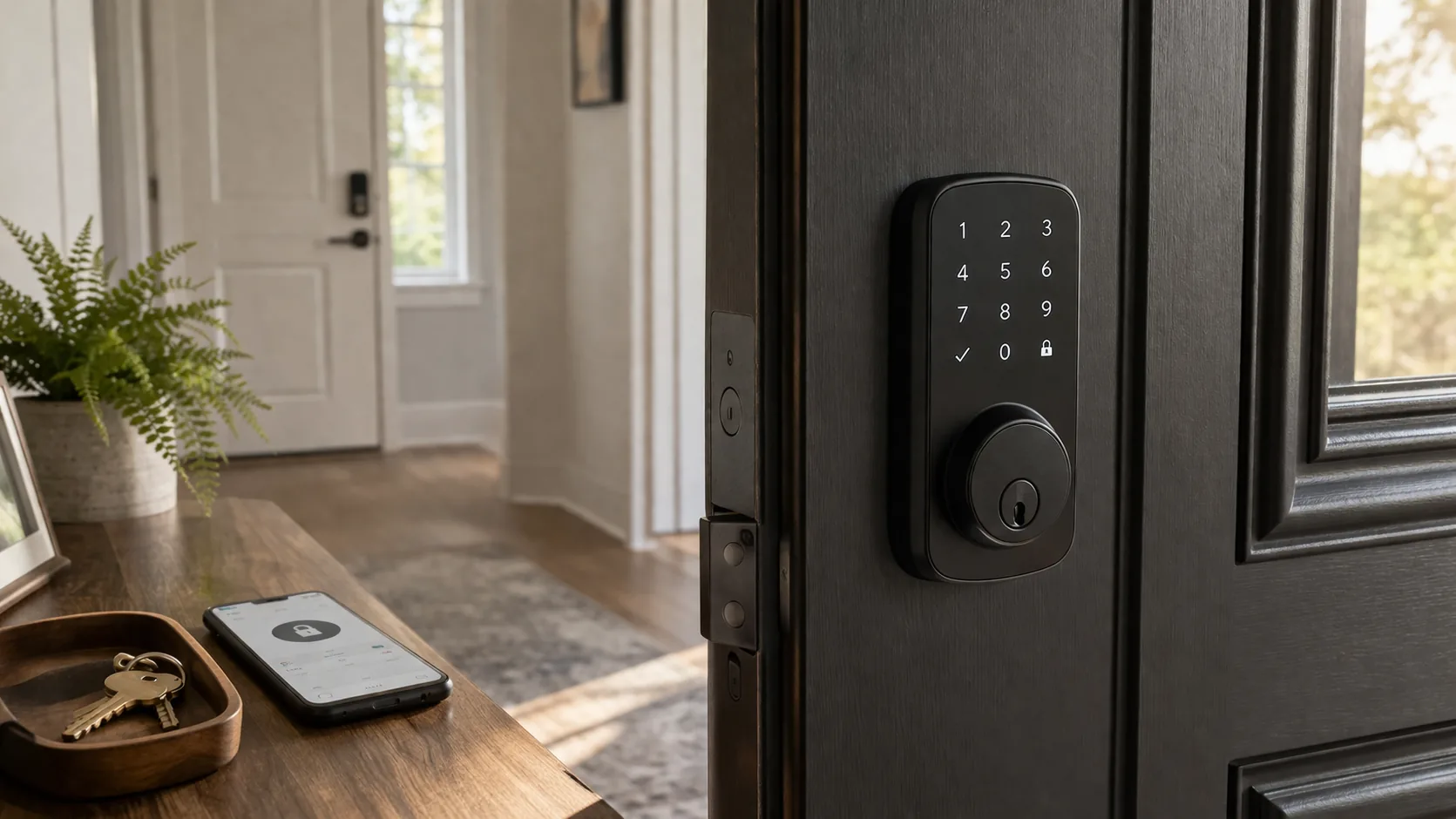
A discount badge on a smart lock means very little on its own. This is a category where weak products hide behind aggressive coupons, vague security language, and feature lists that read well on the page but feel flimsy once they’re hanging on your door. A lower number today doesn’t make a poorly built lock a good buy, and a thin newcomer with a coupon isn’t safer than a proven lock at full price.
So the useful way to think about a smart lock deal isn’t “what’s discounted.” It’s “which locks are genuinely worth your front door, so that when one of them is fairly priced, you can buy with confidence.” This is front-door hardware, not a desk gadget, which raises the bar on brand reputation, build grade, and how the lock fits the rest of your home. The five below span a focused budget keypad, convenience-first Wi-Fi and fingerprint options, a smart-home all-rounder, and an established premium name. Here’s how to tell them apart, and how to recognize a real deal when you see one.
The TEEHO TE001 is the cleanest starting point: a no-fuss keypad deadbolt with auto-lock and guest codes, and the deepest, most consistent buyer history of the group. It skips the app ecosystem and fingerprint reader, which keeps it simple and affordable. For keyless entry without complexity, it’s the easy default.
Which Lock Fits You
- You just want keyless entry and guest codes, nothing more: the TEEHO TE001 keypad deadbolt.
- You want fingerprint and phone control without going premium: the eufy C220.
- You’re building an actual smart home around it: the ULTRALOQ Bolt SE with Matter.
- You value an established hardware name above all: the Schlage Encode.
- You want a modern, rechargeable lock with a top rating: the Tapo DL110.
The TEEHO is the right first lock for anyone who wants the smartest purchase rather than the most features. It stays focused on what a front door actually needs: keypad entry, auto-lock, flexible guest codes, and a straightforward deadbolt-style install. It also has the deepest, most consistent buyer history in this group by a wide margin, which makes its high rating far easier to trust than a newcomer’s score sitting on a few hundred early reviews.
The reason it works so well is that it doesn’t make you pay for extras many people never use. There’s no app to babysit and no fingerprint reader to calibrate. You get a clean keypad deadbolt that holds plenty of access codes plus a one-time guest code, which is exactly what suits rentals, family, cleaners, or occasional visitors. It’s not for someone chasing deep automation. It’s for someone who wants a credible, well-proven keyless upgrade without paying for complexity.
Skip this if you want remote control, app management, or fingerprint unlock, where the eufy or ULTRALOQ make more sense, or you want premium hardware feel, which the Schlage delivers.
TEEHO TE001
The eufy C220 is the pick for the jump from a basic keypad deadbolt to a true app-connected lock, without climbing all the way into premium pricing. It packs built-in Wi-Fi, fingerprint unlock, app remote control, voice assistant support, and smartwatch compatibility into one unit, a noticeably richer feature set than the budget option, and it has enough buyer history to take the rating seriously.
Its real strength is how much daily friction it removes. Fingerprint recognition improves with use, remote access is built in rather than needing a separate bridge, and the whole thing is aimed at practical everyday control instead of novelty. That makes it a good fit for someone who genuinely wants to manage codes, check lock status, and let people in from their phone. The trade is that the hardware grade is mid-tier, so the value story leans more on convenience than on maximum mechanical strength.
Skip this if you want the strongest possible hardware confidence, where the Schlage feels more substantial, or you’ll never actually use the app features, where the simpler TEEHO saves you money.
eufy Security C220
The ULTRALOQ Bolt SE is the one to get if ecosystem compatibility genuinely matters to you. It pairs a solid buyer history with the broadest smart-home feature set in the group, including Matter over Thread, Apple Home, Alexa, and Google Assistant, alongside remote access, code sharing, event history, and fingerprint entry. That makes it the most complete smart-home option of the five.
This matters because plenty of locks look connected on the page but turn limited once you try to fit them into a real setup. The Bolt SE is built to work as part of a wider automation system rather than as a standalone keypad. If you care about remote management, shared access for guests or service people, and broad platform support, it reads as a long-term smart-home purchase rather than a one-off gadget. The only caveat is that all that capability means a slightly longer setup, and it pays off most when the rest of your home stack is already in order.
Skip this if you don’t plan to use ecosystem features, where its strengths go to waste and a keypad deadbolt is simpler, or you want the quickest, most basic install.
ULTRALOQ Bolt SE
The Schlage Encode is the choice when brand reputation and a security-first feel matter most. It carries one of the strongest buyer histories in the category and comes from a name many homeowners already associate with serious front-door hardware rather than generic smart-home accessories. Its rating now sits right in line with the rest of this group, so you’re not trading proven hardware for a weaker score.
What you’re paying for here is confidence more than novelty. It offers built-in Wi-Fi, app control, access-code management, lock history, and support for many users, but the bigger point is that it feels like a genuine front-door purchase rather than a disposable experiment. That distinction is worth real money to buyers who’d rather spend more for an established hardware reputation than save a little on an unknown brand.
Skip this if you’re budget-led and mainly want keyless entry, where the TEEHO covers the basics for much less, or you specifically want fingerprint or Matter features, which the eufy and ULTRALOQ handle better.
Schlage Encode
The Tapo DL110 is the most modern option here, pairing a top rating in the group with a cleaner maintenance story than the usual battery-swapping routine. Its buyer history is lighter than the long-established locks above it, so it’s a more selective recommendation: strong current signals, but not the same deep, years-long track record as the top pick.
Why it still earns a spot is simple. It combines fingerprint access, a touchscreen keypad, in-app monitoring, scheduled access, and a rechargeable battery that lasts a long stretch between charges, with a USB-C emergency power fallback if it ever runs flat at the wrong moment. That mix feels more polished than many similarly rated locks that still rely on disposable batteries and thinner apps, and its hardware grade is a step up from the budget tier. If you want a newer lock with better rechargeability and a strong current score, it’s a credible upgrade, as long as you’re comfortable buying into a younger track record.
Skip this if you want the deepest, most battle-tested ownership history, where the TEEHO and Schlage lead, or you prefer simply swapping batteries to recharging.
Tapo DL110
How These Five Trade Off
These locks don’t sit on a single scale. They split along clear lines, and naming your priority settles it.
Simplicity versus connectivity. The TEEHO does one thing, keyless entry, and does it cheaply and reliably. The eufy, ULTRALOQ, and Tapo add Wi-Fi, fingerprint, and app control, and the ULTRALOQ goes furthest into ecosystems. More connectivity means more convenience but also more setup and more that can need attention. Buy the connectivity you’ll actually use, not the longest feature list.
Proven history versus newest features. The TEEHO and Schlage rest on deep, long-running ownership, so their ratings are well tested over years. The Tapo posts a top score but on a younger record, and the eufy sits in between. A slightly older lock with a vast history can be more reassuring than a newer one with a higher number, depending on what gives you confidence.
Hardware grade versus price. A lock is the one smart-home device where build strength genuinely matters, since it’s protecting an entrance. The Schlage and Tapo lean harder on hardware grade, while the budget and mid-tier picks prioritize features and value. If maximum mechanical confidence is the goal, weight that over a lower price; if you mainly want convenience, the value picks are sound.
Judge the lock first, the price second
The right question isn’t whether something is discounted, it’s whether the lock is strong enough to deserve your door at all. A cheap lock with thin history, weak app support, or a shaky hardware reputation isn’t a better buy just because today’s number looks low.
Decide what kind of lock you need before comparing
If you want a reliable keyless deadbolt and nothing else, a keypad lock like the TEEHO makes more sense than paying for app features you’ll never open. If you want remote control, fingerprint access, or smart-home integration, compare within the eufy and ULTRALOQ class instead.
Weigh brand and hardware grade heavily
This is front-door hardware, so reputation and build grade matter more than in most smart-home categories. That’s why an established name like Schlage still carries weight, and why a newer lock needs stronger feature or rating signals to justify the jump.
Don't anchor on a single price
Smart lock prices move around, so the smart move is to know which locks are worth buying and then act when one of them is fairly priced. Decide on the right lock first, and let the price be the timing, not the reason.
What actually makes a smart lock worth buying?
A worthwhile smart lock combines a credible, well-built product with a deep, stable buyer history and features that clearly fit how you’ll use it. A temporary discount on a weak lock isn’t the same as a genuinely good buy, so judge the lock on its own merits first and treat price as the timing.
Is a cheap keypad smart lock enough for most homes?
Often, yes. If you mainly want keyless entry, guest codes, and auto-lock, a keypad deadbolt like the TEEHO solves the core problem without pushing you into smart-home complexity, and it tends to have the deepest, most reassuring ownership history at the same time.
When is built-in Wi-Fi worth paying for?
Wi-Fi earns its keep when you genuinely want remote locking, code management, notifications, or app monitoring. If you’ll only ever unlock the door in person, the extra connectivity matters far less and a simpler lock is the better value.
Which pick is best for a smart home?
The ULTRALOQ Bolt SE fits smart-home users best because it supports Matter, Apple Home, Alexa, and Google Assistant while also offering fingerprint access, app control, remote management, and code sharing, so it works as part of a wider system rather than a standalone keypad.
Which lock is best if I care most about brand trust?
The Schlage Encode is the clearest answer. It’s the most established hardware name in this group and reads like a serious long-term front-door purchase rather than a lighter gadget, with a rating now in line with the rest of the field.