
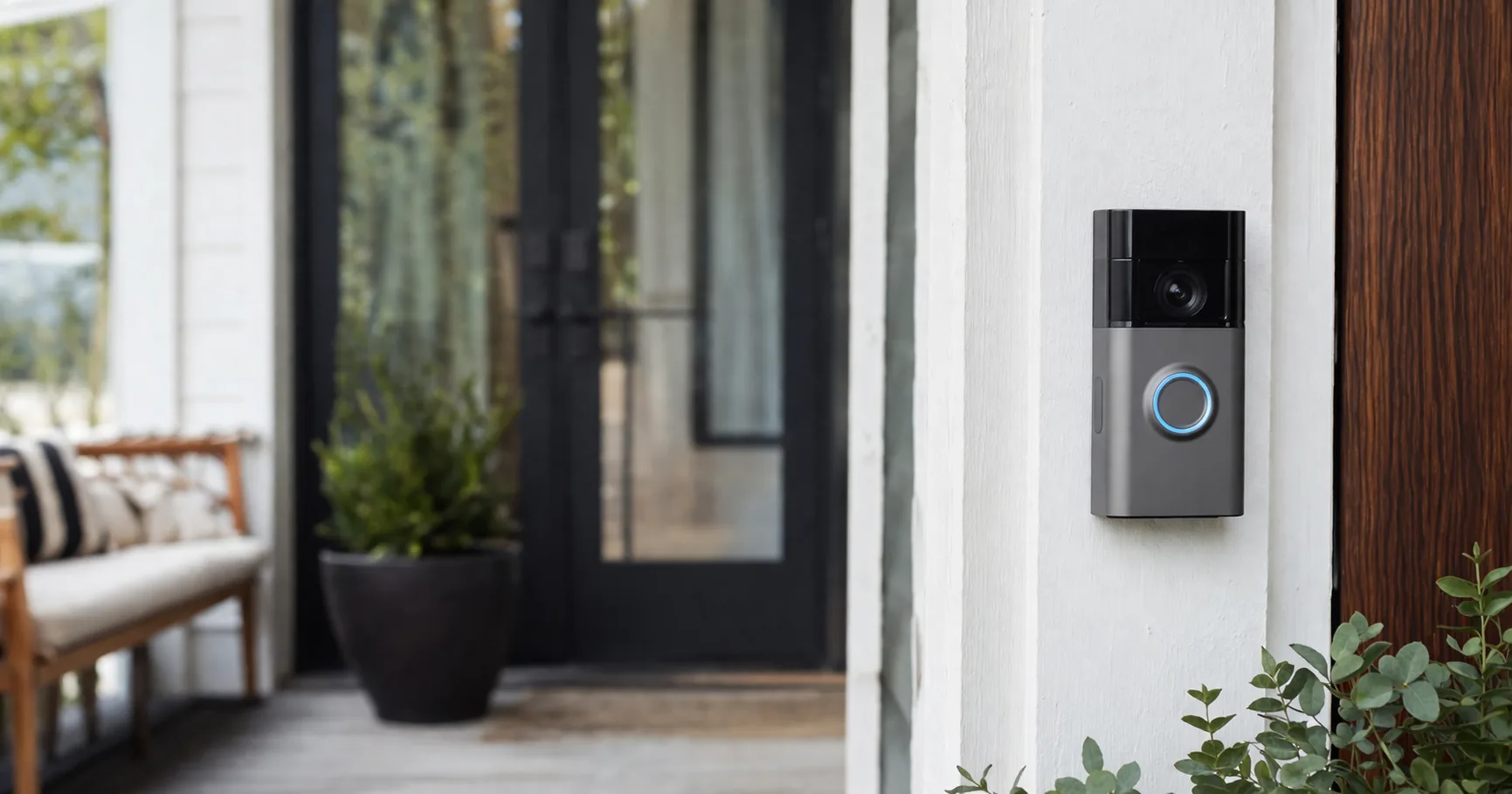
Picking a Ring doorbell is rarely a question of whether Ring is any good. It is a question of which Ring, and that decision turns on two unglamorous things almost nobody mentions in the listing: what wiring your front door already has, and how you feel about a recurring subscription. Get those two right and the rest of the choice falls into place quickly.
This review treats the standard Ring Battery Doorbell as the main model, since it is the one most shoppers land on, then compares it against the cheaper wired version below it and the pricier Battery Doorbell Plus above it. The goal is not to crown a winner. It is to help you figure out which one fits your door with the fewest compromises, because the "best" Ring genuinely depends on your porch, not on a spec sheet.
- Products analyzed
- 3
- Average rating
- 4.5
- Price range
- budget to premium
- Top rated
- Ring Battery Doorbell (4.5)
- Most reviewed
- Ring Wired Doorbell (82K reviews)
Our Top Pick
The Ring Battery Doorbell is the model this review centers on. It is the easiest version to live with for most people: charge it, mount it, connect it in the app, and you have a working front-door camera without touching a single wire.
At a Glance
| Product | Check |
|---|---|
| Ring Battery Doorbell, Home or business security with Head-to-Toe video, Live View with Two-Way Talk, and Motion Detection & Alerts, Satin Nickel | (opens on Amazon) |
| Ring Video Doorbell Wired, Home or business security, Two-Way Talk, advanced motion detection, HD camera and real-time alerts to monitor your front door (wiring required) | (opens on Amazon) |
| Ring Battery Doorbell Plus, Home or business security, Head-to-Toe HD+ Video, motion detection & alerts, and Two-Way Talk | (opens on Amazon) |
What Actually Changes Across the Lineup
These three are closer than they look. All of them do the same core job: show you who is at the door, send motion alerts, support a live view, and let you talk through the doorbell from your phone. The differences come down to power source, video framing, and how much you pay.
The Ring Video Wired Doorbell is the low-cost, always-powered option for homes that already have compatible doorbell wiring and mainly want dependable basics. The standard Ring Battery Doorbell is the flexible middle, built for people who want an easy install and no wiring work. The Ring Battery Doorbell Plus is the premium battery model, adding sharper framing and stronger night performance for buyers willing to pay more.
So the real question is not "which Ring is best," it is "which Ring fits my front door with the fewest compromises." For most shoppers, that answer hangs on wiring and your tolerance for recharging more than on any feature list.
The Review
Ring Battery Doorbell, Home or business security with Head-to-Toe video, Live View with Two-Way Talk, and Motion Detection & Alerts, Satin Nickel
Start with the trade-offs, because the battery model has two real ones. You will have to pull it down and recharge it periodically, and Ring puts a meaningful slice of the "smart" experience, the saved video history and richer alerts, behind a paid plan. Neither is a dealbreaker, but both mean the out-of-the-box hardware pitch is a little rosier than the lived-in reality, and you should price the subscription into your decision before you buy.
What it gets right is the setup problem, cleanly. Most people shopping for a video doorbell do not want to think about transformer compatibility, wiring quirks, or whether their old chime will cooperate. The battery model removes all of that. You charge it, mount it, pair it in the app, and you are done, no small home-improvement project required. It also pairs that ease with head-to-toe video, live view, two-way talk, and motion alerts.
That convenience is the product, not a footnote. It does not win every feature comparison, but it covers the most common real-world case better than anything else here: renters, homeowners who want a painless install, and buyers who care about package visibility and front-step coverage more than squeezing out the lowest long-term cost. It also carries one of the deepest review histories in the category, so you are buying a known quantity.
Skip this if: you already have working doorbell wiring and would rather never recharge anything, where the wired model is the smarter buy.
Pros
- Battery setup is far easier for anyone who does not want to deal with wiring
- Head-to-toe video genuinely helps with packages and low-porch visibility
- Very deep review base makes the buying signal strong
- Sits in the practical middle between cheap wired and pricier battery upgrade
Cons
- Periodic recharging is the cost of battery convenience
- Some of the better alerts and saved history depend on a paid plan
The Alternatives Worth Weighing
Ring Video Doorbell Wired, Home or business security, Two-Way Talk, advanced motion detection, HD camera and real-time alerts to monitor your front door (wiring required)
The Ring Video Wired Doorbell is the smartest buy for homes that already have compatible doorbell wiring and want the cheapest dependable way into the Ring ecosystem. It costs far less than the battery model, and that alone makes it the value pick of this review.
The logic is simple: wired power erases the most tedious part of battery ownership. You never pull the unit down to recharge, and the low entry price is easy to justify if you mainly want solid front-door monitoring rather than a feature-heavy security setup. It is also the most-reviewed model here by a wide margin, which makes it one of the safest trust signals in the whole category.
It is fully capable, too: clear HD video, two-way talk, advanced motion detection, real-time alerts, night vision, and always-on power. For buyers who do not need head-to-toe framing and are happy with a wired install, it can be the smarter purchase than the battery model. The single condition is the wiring itself. If it is missing, weak, or something you would rather not touch, the low price stops telling the whole story and the battery model earns back its cost.
Skip this if: your home lacks compatible doorbell wiring, or you are a renter who cannot modify it.
Pros
- Lowest price in the lineup by a wide margin
- Hardwired power avoids recharge downtime
- Huge review base, one of the safest signals in the category
- Covers the core Ring experience well without battery flexibility
Cons
- Requires compatible wiring, ruling it out for some homes and renters
- Less flexible than the battery model if easy installation is the priority
Ring Battery Doorbell Plus, Home or business security, Head-to-Toe HD+ Video, motion detection & alerts, and Two-Way Talk
The Ring Battery Doorbell Plus is the step-up for buyers who already know they want a battery Ring and will pay more for a more polished result. It asks enough extra that the upgrade has to be practical rather than emotional.
Its strongest appeal is the pairing of sharper head-to-toe video and color night vision. That matters most if your front door sees a lot of evening traffic, if package visibility is a real priority, or if you simply want the best battery-powered Ring in this slice of the lineup without leaving the ecosystem. It is also the clearest answer for anyone who finds the standard battery model close but not quite enough.
The catch is predictable. It carries the same battery maintenance and subscription trade-offs as the rest of the battery line, and the extra spend will not feel transformative to everyone. If you mainly want basic front-door coverage and app alerts, the standard battery model is usually the smarter place to stop.
Skip this if: you mostly want basic coverage and alerts, where the standard battery model saves you money for the same core job.
Pros
- The best battery Ring here for buyers who want a stronger overall package
- Sharper video and color night vision make the premium case clear
- Head-to-toe framing is especially useful for packages and porch activity
- Large review base shows the upgrade has real demand
Cons
- Notable price jump over the standard battery model
- Same recharge and subscription trade-offs as the rest of the battery line
Is a Ring Video Doorbell Worth It in 2026?
Yes, but the right version depends heavily on your setup. For the easiest all-around battery recommendation, the standard Ring Battery Doorbell still makes the most sense. It is flexible, proven, and modern enough to feel current without drifting into premium pricing.
The cheapest model is not an afterthought, though. The wired doorbell is the better buy for many homeowners simply because hardwired power is a genuine quality-of-life win. And the Battery Doorbell Plus is the right answer only if you know you will value the premium video and night performance enough to pay for them.
The practical takeaway: Ring is still worth buying, as long as you choose the model around your install reality and your feelings about the subscription. Do that, and the lineup holds up well.
Is the standard Ring Battery Doorbell worth buying in 2026?
Yes. It is the safest battery-powered Ring for most buyers, balancing easy installation, a deep review history, head-to-toe video, and mid-range pricing better than the cheaper wired model or the pricier Plus.
Is the wired doorbell a better value?
Yes, if your home already has compatible doorbell wiring. It costs much less and removes recharging entirely, which makes it the better value for buyers who do not need battery flexibility.
Is the Battery Doorbell Plus worth the extra money?
It can be, mainly for buyers who specifically want the sharper video and stronger night performance. It is not the automatic best buy for everyone, since it shares the same recharge and subscription trade-offs.
Do I need a Ring subscription?
The doorbell works for live view, motion alerts, and two-way talk without one, but saved video history and some richer alert features require a paid plan. Factor that recurring cost into the decision, because it is part of the real ownership experience.
Which Ring should most people buy?
Decide whether wired or battery is the real priority first. If wiring is easy, the wired model is the stronger value. If a painless install matters more, the standard Ring Battery Doorbell is the better all-around choice.
As an Amazon Associate I earn from qualifying purchases. Prices and availability change frequently — use the Amazon button to check current pricing.