
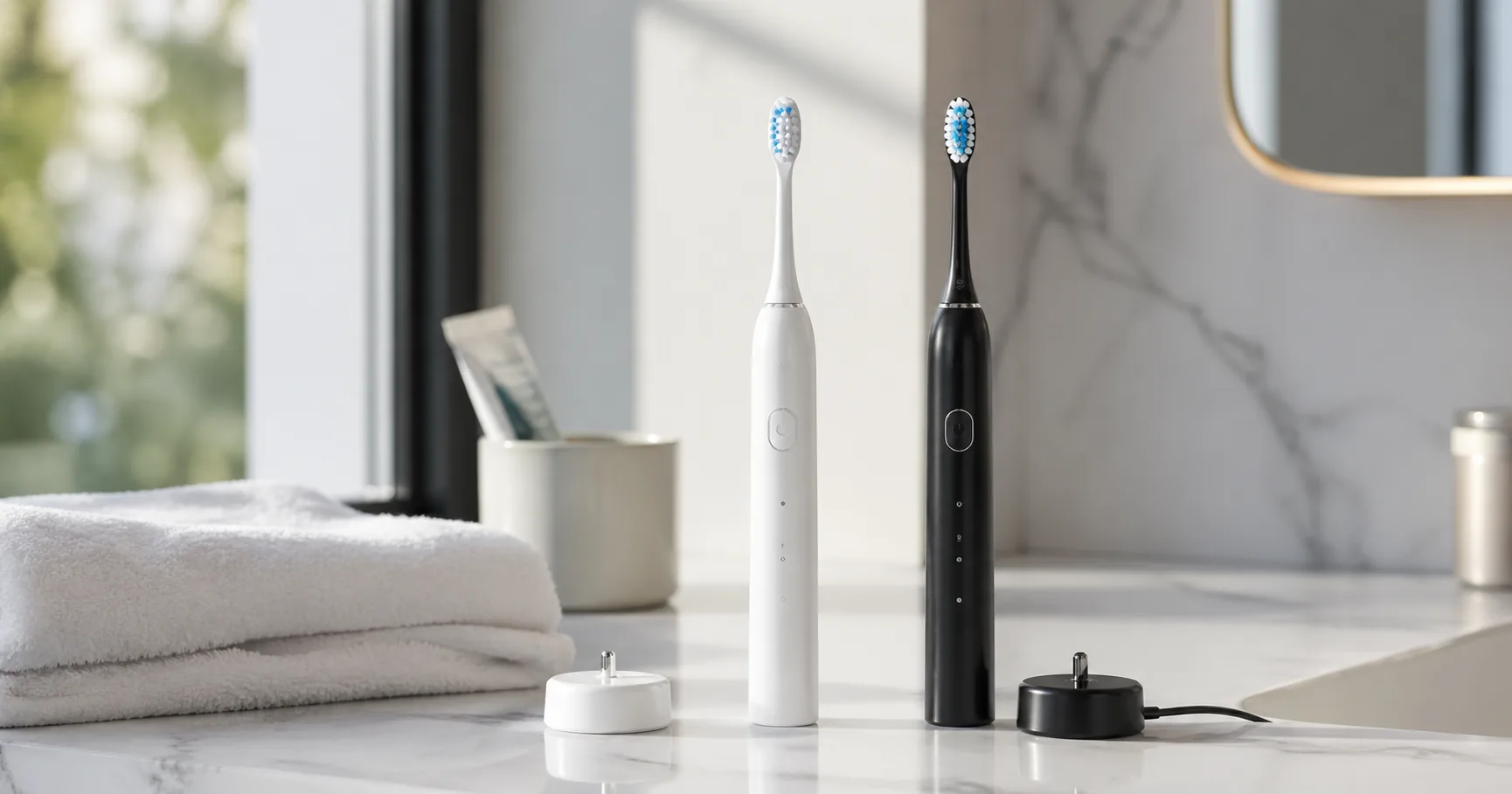
Two brushes own the budget end of the electric toothbrush aisle, and most people shopping their first electric end up choosing between them. Both come from brands dentists actually name, both have been around long enough to rack up huge review bases, and both sit at the entry rung of their lineups. On the shelf they look like near-twins at a near-identical price. In the mouth, they are not the same brush at all.
The real divide is how they clean. One spins and scrubs each tooth in turn. The other vibrates fast enough to drive foam and fluid between teeth and along the gumline without hard scrubbing. Neither is “better” in a vacuum; they suit different mouths. Sensitive gums, recession, and dental work tend to do best with the gentler vibrating style, while people who want the most thorough surface scrub often prefer the spinning kind.
So this isn’t a contest with one winner. It’s a question of which cleaning style and which set of small daily conveniences fit you. Below are the two brushes, then the situations where each clearly wins, and the tie-breakers for when you’re still undecided.
For most first-time buyers, the Philips Sonicare 4100 is the safer pick. It’s gentle on gums, goes much longer between charges, and shuts itself off at the two-minute mark. The Oral-B Pro 1000 cleans more aggressively and is the better choice if that’s what you specifically want.
The Sonicare 4100 is the entry point into Philips’s sonic line, and it carries the higher rating of the two on a large review base. Instead of scrubbing, the head vibrates rapidly so that toothpaste foam and saliva get pushed between teeth and along the gumline. That motion is the main reason hygienists often steer people with sensitive gums, recession, or dental work toward sonic brushes, and long-term owners frequently report years of daily use without irritation.
Two everyday things make it easy to live with. Battery life is excellent: it goes roughly two weeks of twice-a-day brushing on a charge, often more, so you can leave the charger home on a short trip. And it shuts off automatically at the two-minute mark, which the Oral-B doesn’t, a small thing that quietly helps you brush the full recommended time. The slim head also reaches back molars and the inside of the front teeth easily, which owners with smaller mouths appreciate.
The limitations are minor. It’s effectively a single cleaning mode, the pressure indicator on the handle is awkward to see in the mirror while brushing, and genuine replacement heads aren’t cheap. There’s also a newer version of the 4100 in circulation, so the long-reviewed original can have uneven stock.
Philips Sonicare 4100
The Oral-B Pro 1000 is the long-running favorite among spinning brushes and the more heavily reviewed of the two. Its round head oscillates, rotates, and pulses to scrub each tooth individually, and the result is a clean that owners often describe as deeper and more aggressive than sonic, the kind that feels like you just left the hygienist’s chair. For people who grew up with manual brushes and like the sensation of bristles physically lifting plaque, it’s the more satisfying of the two.
Its standout trait beyond the clean is longevity. It’s common to see owners report many years of reliable service from a single Pro 1000, which is unusual at this price, and it comes with a solid warranty and a risk-free trial window. The pressure protection works by easing off the pulsing rather than flashing a light, which some people find subtler and others don’t notice.
The honest weaknesses are battery and timing. It needs charging roughly weekly rather than every couple of weeks, and some owners notice the battery weakening after the first year. It also doesn’t switch off on its own at two minutes; it runs until you stop it, which is an odd omission and a small downside for anyone using the brush to build a two-minute habit.
Oral-B Pro 1000
Tie-Breakers
Here’s how the choice actually shakes out, by situation rather than spec.
You have sensitive gums, recession, or dental work. Go Sonicare. The gentler vibrating action is the kinder choice for tender gums, crowns, veneers, or braces, and it’s the brush type more often recommended for exactly these cases. The Oral-B is fine for many people here too, but if sensitivity is your starting point, the 4100 is the safer landing spot.
You travel often or hate babysitting chargers. Go Sonicare. The big gap here is battery: roughly two weeks per charge means you can pack it without the charger for short trips, while the Oral-B wants topping up about once a week. If “one less cable to remember” matters to you, this alone can settle it.
You want the most thorough surface scrub and like the feel of it. Go Oral-B. The spinning head delivers that deep, polished, just-left-the-dentist sensation that sonic doesn’t quite replicate. People coming off manual brushes who want to feel the plaque being lifted tend to prefer it.
You want the longest-lasting handle and don’t mind weekly charging. Lean Oral-B. Its reputation for running for years on a single unit is genuine, and if you’d rather buy once and forget it, that durability is worth the weekly charge habit.
Still torn? These usually decide it.
Mouth size. Smaller mouth, slim head wins. The Sonicare’s narrower head is easier to maneuver around back molars and behind the front teeth, a recurring preference among owners who found the round Oral-B head a touch bulky.
Building the two-minute habit. If you, a partner, or a kid tends to cut brushing short, the Sonicare’s automatic shutoff at two minutes nudges you to the full time. The Oral-B leaves that entirely up to you.
Replacement-head plan. Both brands’ genuine heads are a recurring cost, and you’ll swap them every few months regardless of which handle you buy. Well-rated aftermarket heads cost noticeably less for both, though many dentists still prefer the originals. If long-run cost matters, price out the heads for each before you decide, since that adds up far more than the small gap in handle price.
Cleaning effectiveness. Don’t overthink this one. Both clean dramatically better than any manual brush, and in everyday use the difference between them comes down to technique and consistency far more than the brushing style. Pick the one you’ll actually use twice a day.
When you genuinely can’t choose, the Sonicare 4100 is the better default for most people: gentle enough for almost any mouth, easy to live with, and forgiving of a casual routine. The Pro 1000 is excellent, but it rewards a specific preference for an aggressive scrub and a buy-it-for-years mindset. Match the brush to your gums and your habits, and either one will leave your teeth far cleaner than what you’re using now.
Wondering about the next Sonicare step up from the 4100? See Philips Sonicare 4100 vs 5100.
Which is better for sensitive gums?
The Sonicare 4100. Its vibrating action is gentler than the Oral-B’s spinning scrub, and sonic brushes are the type more often recommended for gum recession, sensitivity, or recent dental work. The Oral-B can work for sensitive mouths too, especially eased off, but if tenderness is your main concern, the 4100 is gentler from the start.
Does the Oral-B really remove more plaque than the Sonicare?
Any edge is small, and in daily life it’s swamped by how well and how consistently you brush. Both styles clean far better than a manual brush. The spinning head can feel like it delivers a more thorough surface scrub, but for real-world results, technique and brushing the full two minutes matter much more than which of these two you choose.
How long does the battery last on each?
The Sonicare 4100 goes roughly two weeks of twice-daily brushing on a charge, sometimes longer, which is the clear advantage for travel. The Oral-B Pro 1000 lands closer to a week in real use, and some owners notice it weakening after the first year. If you’d rather charge as little as possible, the Sonicare wins this one easily.
Are replacement brush heads expensive?
Genuine heads from either brand are a recurring cost, and you should replace them every few months no matter which handle you own. Well-reviewed aftermarket heads cost noticeably less for both brands, though many dentists prefer the originals. Over a few years the head cost adds up to more than the difference in handle price, so factor it into the decision.
Do either of these have an app or Bluetooth?
No, both are deliberately simple brushes. App tracking and connectivity start higher up in each brand’s lineup. If brushing analytics aren’t something you care about, you’re not missing anything meaningful at this entry level, and you avoid paying for features most people never use.
Can I use the Sonicare 4100 with braces or veneers?
Yes. Philips markets it as safe for braces, fillings, crowns, and veneers, and the gentle sonic motion suits dental work well. The Oral-B is generally fine with these too, just more aggressive, so if you have extensive dental work or any concerns, it’s worth a quick word with your dentist about which feels right for your situation.