
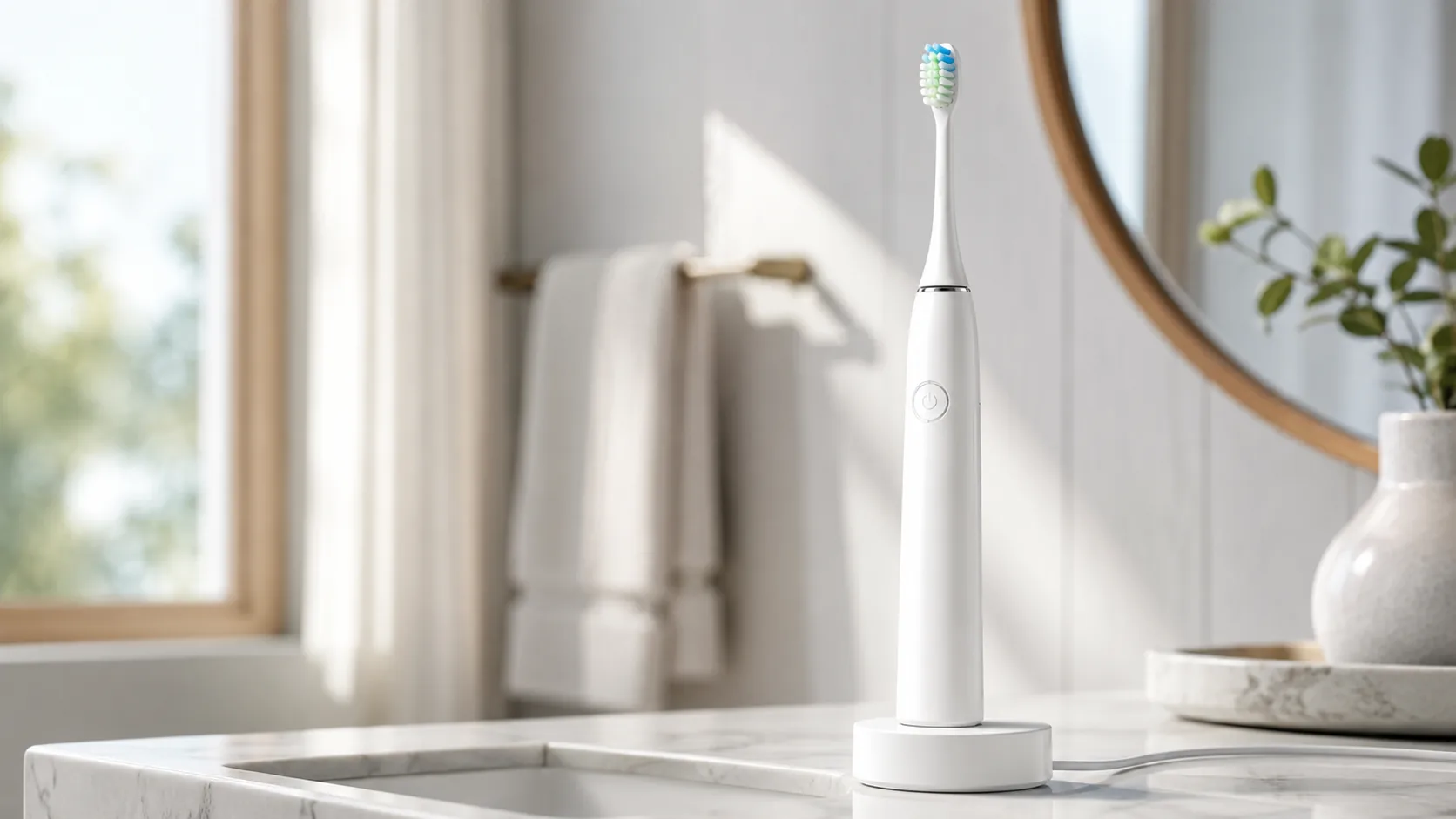
Almost everyone who steps up from a drugstore brush ends up staring at the same wall of Philips Sonicare models, and the 7300 is the one that quietly makes the most sense. It is the brand's newer mid-tier sonic brush, and it has already climbed to near the top of its category within weeks of launch, while most of its review competition is still thin. On a spec sheet the differences between Sonicare tiers look small, which is exactly what makes the lineup so confusing.
The catch is that those tiers feel a lot more similar in your hand than the prices suggest. This review is about whether the 7300 is the one to buy, what owners actually report after living with it, and where the line sits between the cheaper Sonicare below it and the pricier models above. The short version, which will not surprise anyone who reads the reviews: for most people, the 7300 is the smart buy. The useful part is knowing why, and when you are the exception.
Our Top Pick
The Sonicare 7300 is the brush to buy if you want a genuinely premium sonic clean without paying for tiers you will never use. Owners describe a dentist-visit-clean feeling, real gum improvement within weeks, and a gentler bite than Oral-B's rotary spin. The honest catch is that it is loud, and the vibration is intense enough that the first few days take some adjustment. Buy it if you are stepping up from a manual or a cheap electric brush, switching from an Oral-B that felt too harsh, or you simply want Sonicare's clean without the top-tier price. Look higher up the line only if you specifically want premium extras like a charging glass and a fuller app.
The Sonicare 7300 at a Glance
| Product | Check |
|---|---|
| Philips Sonicare 7300 Series Electric Toothbrush - Next-Generation Sonicare Technology, Pressure Sensor, 12 Brushing Settings, SmarTimer, BrushPacer, 21-Day Runtime, Travel Case, Black, HX7421/07 | (opens on Amazon) |
Where the Sonicare 7300 Fits, and Where It Doesn't
You are stepping up from a manual or a cheap electric brush. This is the 7300's home turf. First-time electric owners repeatedly describe the feeling as walking out of a dental cleaning, and the four modes plus the visual pressure sensor are exactly what a beginner benefits from. One buyer got it for a 98-year-old father after a bad checkup, and a month later the dentist said his gums had improved.
You are switching from an Oral-B that felt too harsh. This is a common reason people cross over. Owners say the sonic motion feels considerably more gentle than Oral-B's rotary spin, yet leaves teeth cleaner. Go in expecting a short adjustment: the vibration is intense for the first few days, and Oral-B switchers describe the sensation as startling at first before they get used to it.
You want a premium clean without the premium price. This is the quiet case for the 7300 over its own pricier siblings. A buyer who compared spec sheets noticed the more expensive Sonicare runs the same cleaning action as the 7300, so they bought this and skipped the upgrade. Going cheaper is the mistake in the other direction: a longtime owner warns the bargain-bin Sonicare is genuinely poor.
You should look elsewhere if you want one specific extreme. If you want the full premium experience, a charging glass and a richer app, a pricier Sonicare is built for that, even though owners say it does not clean any better. If you prefer Oral-B's firm rotary scrub, that is a personal feel preference the 7300 will not satisfy. The 7300 is the balanced middle, and a single-minded need is exactly when the middle is the wrong answer.
The Review
Philips Sonicare 7300 Series Electric Toothbrush - Next-Generation Sonicare Technology, Pressure Sensor, 12 Brushing Settings, SmarTimer, BrushPacer, 21-Day Runtime, Travel Case, Black, HX7421/07
The Sonicare 7300 is Philips's newer mid-tier sonic brush, and the early reception is strong: it has climbed to near the top of its category within weeks of launch, and the large majority of owners rate it five stars with only a small tail of unhappy ones. It pushes 62,000 brush movements a minute through four modes, Clean, Sensitive, Gum Health, and White, and a light ring at the base warns you when you press too hard. The story the reviews tell is consistent, and it is mostly about how clean your mouth feels afterward.
What owners praise most is that dentist-office-clean feeling, a phrase that shows up again and again from first-timers and decade-long Sonicare owners alike. Several report real gum improvement within weeks, including dentist-confirmed gains. People crossing over from an Oral-B single out how much gentler the sonic motion feels than rotary, while still cleaning deeper. Two honest cautions come up often enough to take seriously. First, it is loud, and the vibration is intense enough that you will naturally press lighter, which takes a few days to get used to. Second, the charging base is compact, with no charging glass or multi-head stand, which upgraders from older premium units notice right away.
Skip this if you specifically want premium extras like a charging glass and a fuller app, where a higher Sonicare tier is built for you, or if you prefer Oral-B's firmer rotary scrub. For most people stepping up to a serious brush, though, this is the one that gets the cleaning right without charging for tiers you will not use.
Pros
- Four modes plus a visual pressure sensor that warns when you press too hard
- Owners report a dentist-clean feeling and real gum improvement within weeks
- Gentler sonic feel than Oral-B's rotary, yet cleans deeper, according to switchers
- Travel case included, with a matte handle grippier than older Sonicare gloss
Cons
- Loud motor and an intense vibration that takes a few days to get used to
- Compact charging base only, with no charging glass or multi-head stand
- The Bluetooth app adds little, so it is not a reason to buy
What the Reviews Reveal That the Box Won't
Do not pay up for a step-up model. The single most useful thread in the reviews comes from a buyer who compared spec sheets across the Sonicare range and found the pricier "deep clean" model runs the same cleaning action as the 7300. They bought the 7300 and skipped the premium. If you only care about how clean your teeth feel, the extra tiers are spending money on a badge.
The app is close to pointless. Owners who mention the Bluetooth connection mostly shrug at it, with one summing it up as the app not doing much next to a great toothbrush. If a fuller app is a selling point for you elsewhere, do not let it pull you up a tier here.
It is loud, and the base is bare. Even happy owners flag the motor noise, and the vibration is strong enough that you instinctively press lighter. The brush also ships with a compact charging base only, so anyone upgrading from an older premium Sonicare with a charging glass or a multi-head stand should know that is gone.
Who Should Buy the Philips Sonicare 7300
The Sonicare 7300 makes the most sense for the person who wants a genuinely premium clean and refuses to overpay for the badge. If you are stepping up from a manual brush or a cheap electric, switching from an Oral-B that felt too harsh, or simply want the cleaning Sonicare is known for without the top-tier price, this is the brush the feedback supports with very little hedging. Go in knowing it is loud and that the first few days take some adjustment, and the rest is the dentist-clean feeling owners keep coming back to.
It is the wrong brush only when you have a single, sharp priority. If you want the full premium package, the charging glass and the richer app, a higher Sonicare tier is built for exactly that, even if it does not clean any better. If you prefer Oral-B's firm rotary scrub, that is a feel preference worth honoring. For most people, though, the question answers itself: the 7300 nails the part that matters for less money. If you are still weighing the two brands, our Oral-B vs Philips Sonicare comparison lines them up head to head.
Is the Philips Sonicare 7300 worth it?
For most people stepping up to a premium electric brush, yes. The large majority of owners rate it five stars and repeatedly describe a dentist-clean feeling and real gum improvement. It is not worth it if you specifically want the premium extras of a higher Sonicare tier, or if loud, intense vibration would bother you.
Is the Sonicare 7300 better than the more expensive Sonicare models?
For cleaning, owners who compared spec sheets found the core action is the same, so most people should save the money and buy the 7300. Step up only if the premium extras, a charging glass and a fuller app, genuinely matter to you, not because you expect it to clean better.
Is the Sonicare 7300 good if I am switching from an Oral-B?
Yes, and it is a common reason people cross over. The sonic motion feels gentler than Oral-B's rotary spin while cleaning deeper, according to switchers. Expect a short adjustment, since the vibration feels intense for the first few days before it becomes normal.
Is the Sonicare 7300 too harsh for sensitive gums?
It is built for the opposite. It includes dedicated Sensitive and Gum Health modes plus a visual pressure sensor that warns you when you press too hard, which is exactly why it suits people on a dentist's care plan or managing gum sensitivity.
Does the Sonicare 7300 come with a travel case, and how is the battery?
Yes, a travel case is included. Owners report fast charging and a battery that holds a charge for a long time. Note that the charging base is compact, with no charging glass or multi-head stand like some older premium Sonicare units.